
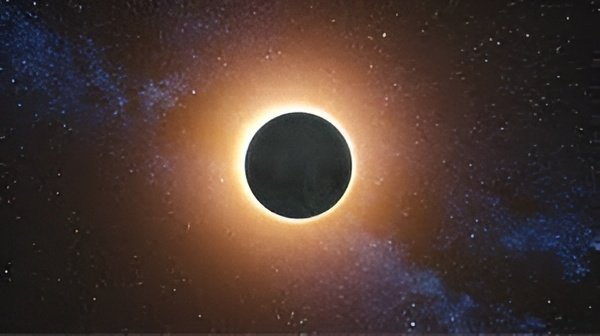
A unique astronomical phenomenon is getting the title of one of the most spectacular celestial moments of the 21st century. Experts claim that an upcoming total solar eclipse—expected to be the longest of the century—will totally darken some areas of the Earth for a remarkably long time, providing a gradual, deep absorption that is different from the usual quick disappearing and reappearing of the sun during eclipses that last for just a few seconds.
A Record-Breaking Eclipse
Total solar eclipses at their max duration typically only last minutes since the shadow of the Moon quickly moves over the Earth. Nevertheless, the upcoming totality will last a lot longer, and the observers can thus very well witness the strange metamorphosis, as the light of midday dies out to twilight, and the temperature and natural sounds gradually drop to that of the night. Its rare length also means that scientists have a unique chance to do more extensive observation.
The event relies upon a unique arrangement of the celestial bodies: the Moon has to be nearly exactly in front of the Sun and also near the Earth, which makes its shadow slightly bigger than usual.
Where Total Darkness Will Be Visible
The trajectory of the eclipse during totality, approximately 150-200 km wide, will pass through a narrow strip of the Earth. In this strip, the viewers will see the complete darkness and stars, planets, and the Sun’s brilliant corona will be visible. The regions just outside the totality will experience a dark partial eclipse while regions that are further away will see a crescent-shaped Sun and a sky that is only slightly dimmed.
Local geography and weather will shape each viewer’s experience, with midday eclipses appearing the most dramatic.
Why This Eclipse Lasts Longer
The extended duration is the result of three key factors:
- Moon’s proximity to Earth (perigee), making it appear slightly larger
- Earth’s position in its orbit, reducing the Sun’s apparent size
- Shadow path geometry, allowing the Moon’s umbra to linger longer over populated regions
This rare combination extends totality well beyond what is typically observed in most eclipses.
What Observers Can Expect
Just before the total eclipse, the light will go through a transformation into a metallic tone, the sharpness of shadows will increase, and there will probably be a sudden drop in temperatures. In absolute darkness, the viewers will be delighted with the sight of the Sun’s corona, solar prominences and possibly Baily’s beads—fantastic beads of light illuminating the valleys of the Moon.
Animals may react as if night has suddenly arrived, offering scientists unique opportunities to study behavioural changes.
A Rare Scientific Opportunity
The prolonged darkness creates a natural laboratory for researchers. Scientists plan to study:
- The Sun’s corona across multiple wavelengths
- Atmospheric changes caused by sudden cooling
- Effects on the ionosphere and radio signals
- Wildlife behaviour and environmental responses
Because such long-duration eclipses are rare and geographically limited, researchers consider this a once-in-a-generation event.
Preparing for the Eclipse
Travellers hoping to witness totality should plan early. Hotels and flights along the eclipse path typically book out far in advance. Clear-weather regions may offer better experiences than those located at the exact point of maximum duration.
Essential safety guidelines include using certified eclipse glasses, proper filters on optical equipment, and avoiding homemade substitutes like smoked glass or darkened plastics.
Myths, Risks and Benefits
While eclipses often spark unfounded rumours, experts emphasize that the only real danger comes from looking directly at the Sun without protection. Many regions along the path will likely experience a tourism boost, with schools, local communities, and businesses preparing special events.
Beyond spectacle, this eclipse provides an opportunity for families, educators and students to engage in simple science activities—from pinhole projections to temperature tracking—deepening public understanding of astronomy.
As astronomers note, the combination of perfect cosmic geometry, longer darkness and widespread visibility makes this event one of the most captivating eclipses of the century.




Women’s Reservation Bill Fails in Lok Sabha; Rahul Gandhi Slams Centre, Credits Opposition Unity