
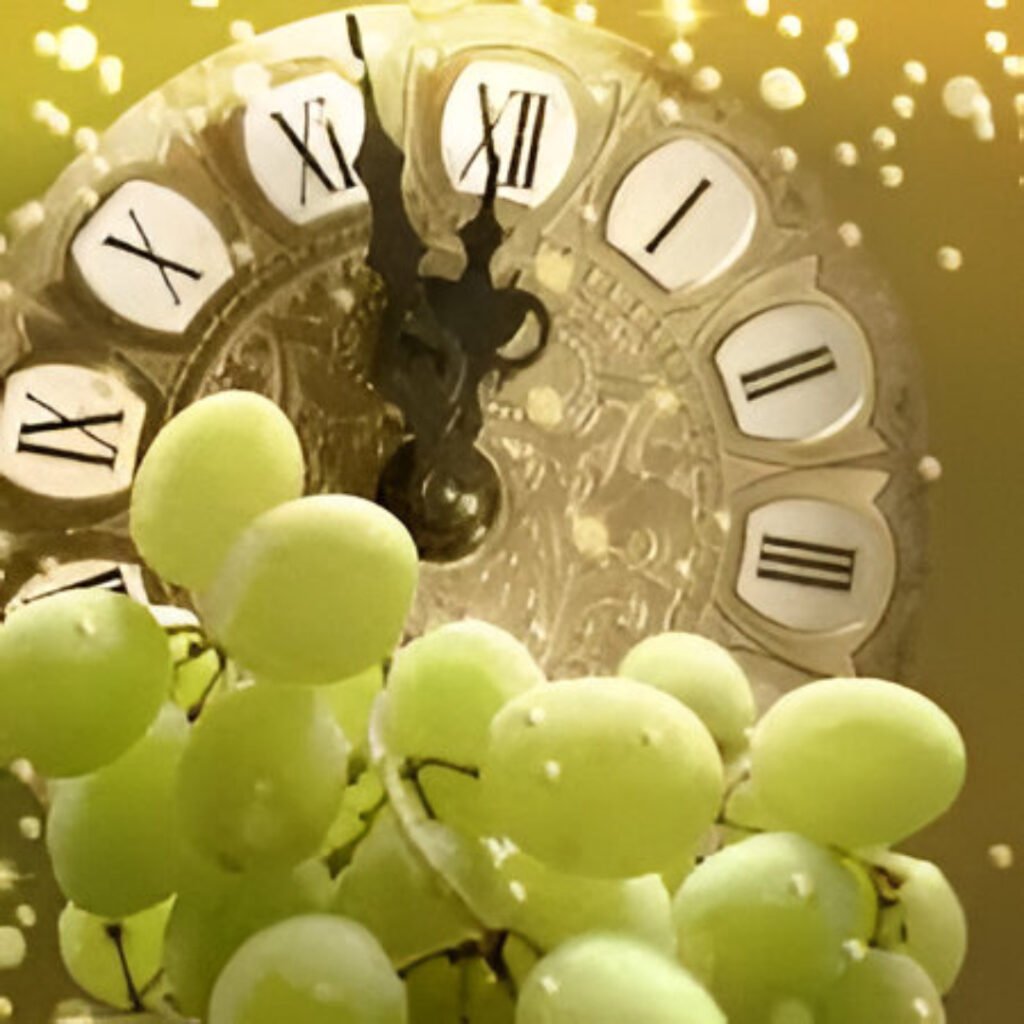
Spain, along with a lot of other nations, is not letting go of traditional New Year’s Eve parties, but the oddity of consuming 12 grapes at exactly twelve midnight is still alive. This custom is famously recognized as Las doce uvas de la suerte the Twelve Grapes of Luck.
The cultural habit of eating one grape indicates a month in the next year, whereas the mythical eating of all twelve grapes is considered to attract good fortune, happiness, and fortune. Normally, a single grape is eaten at each bell ring during the final minute of the year and that represents one’s wishes and hopes for health, money, love, and personal achievements.
Roots of the Custom
The practice can be traced back to the 1880s when the upper classes of Madrid used to eat grapes and drink champagne on New Year’s Eve. Alicante’s farmers pushed the ritual in order to sell the surplus grapes and grapes were plentiful. It finally turned into an accepted practice in the early 20th century.
Things have not changed in a hundred years as the practice of consuming grapes at midnight remains a strong bulb of a Spanish tradition. Tinned “12 lucky grapes” sales increased at supermarkets, and these grapes are mostly peeled and seeded to make it easy for people to eat them very quickly when the church bells announce midnight. There are also some social media trends in which people are seen trying the ritual under tables, however, this is a very recent variation and has nothing to do with the original custom.
Importance of Eating All 12 Grapes
The common belief is that by eating all 12 grapes one gets a whole year of prosperity and luck. The act of slowly eating each grape while visualizing one’s personal dreams and goals is considered to have a strong impact on their realization.
The 12 grapes are thus an unbreakable bond between Spain and the New Year celebrations, which also keep the people of Spain, and the rest of the world, in a happy and positive mood at the same time every New Year.




Women’s Reservation Bill Fails in Lok Sabha; Rahul Gandhi Slams Centre, Credits Opposition Unity