
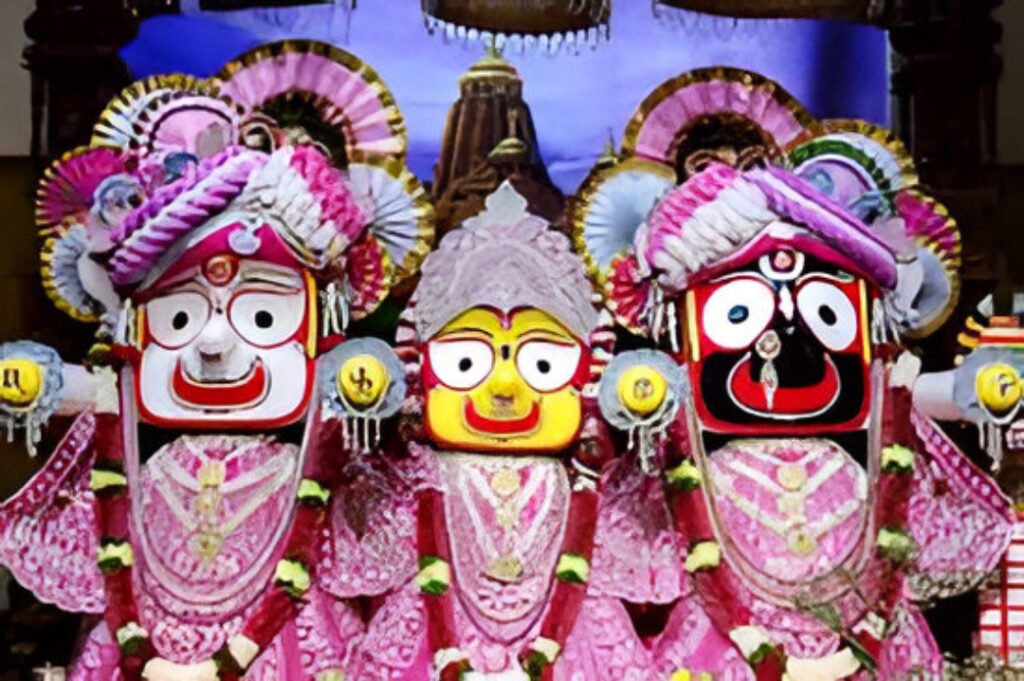
Indian temples are not the only places to worship, but they are also the living libraries of the stories that were passed down from one generation to another. The stories of the gods are the main source of the temple traditions, which make every visit to the temple deeply significant. The temple-related beliefs range from cleansing obstacles to giving new life, but they all share one thing – a strong narrative.
Among the sacred stories, the tales of Jagannath, Balabhadra, and Subhadra captivate the most as they depict the bond among the divine siblings. Especially in the temple of Lord Jagannath at Puri, Odisha, worship of Lord Vishnu (as Jagannath) is done not through his consort Lakshmi but with his brother and sister making it one of the most peculiar practices in the Indian temples.
The oral history related to the famous Rath Yatra reveals the spiritual importance of this festival. It is remarkable, however, that the Goddess of Wealth, Lakshmi, is not part of the siblings’ yearly journey, a situation that gives rise to a number of mesmerizing stories.
Why Are the Jagannath Idols Incomplete?
http://www.indidanotours.com One of the most renowned legends surrounding the Puri Jagannath Temple narrates the reason behind the deities being represented only with faces and lacking other body parts. It is said that King Indradyumna was given a heavenly order to create the images from a divine tree trunk. Lord Vishwakarma would execute the carving but under one condition—he would require a period of 21 days totally free of disturbances.
The king could not stand the silence in his workshop and, worrying, he reopened the door breaking the pact only to find that the artist had gone and the images were still in the making. Feeling hopeless, the king got a heavenly assurance that the flawed forms were divinely acclaimed. So the idols keep their original forms.
Lesson: Imperfection carries its own beauty. Patience and acceptance are essential parts of faith and life.
The Story Behind the Grand Rath Yatra
Every year, the Rath Yatra festivity witnesses the attendance of uncountable number of devotees who in unison draw the three huge chariots, which carry the gods Jagannath, Balabhadra, and Subhadra respectively, to the Gundicha Temple. The procession, which lasts nine days, stands for the God’s visit to His aunt, Gundicha, a promise that He always fulfills.
After a few days there, the brothers and sister come back in the Bahuda Yatra, taking a break and enjoying traditional offerings such as Poda Pitha during the journey.
Lesson: Even the Lord of the universe values humility, gratitude and keeping promises.
Why Does Lord Jagannath Fall Ill?
Before Rath Yatra, it is said that Lord Jagannath gets sick and during Anasara he is not seen at all. One of the stories explains that he sufferings of a devotee, while the other connects the illness with the ritual of bathing with 108 pots of water during Snana Purnima.
Although he is not visible, the Lord’s so-called darshan symbolises that he is taking rest and then he is all set to appear at Rath Yatra.
Lesson: Caring for loved ones during difficult times is a sacred duty.
Krishna’s Living Heart in Jagannath
A widely known folktale claims that the heart of Lord Krishna was always alive and that it is the Brahma Padartha in the idol of Jagannath. This holy part is moved to the newly made idols during the clandestine Nabakalebara ceremony.
Lesson: True devotion transcends form—faith connects directly with the divine.
Salabega: Devotion Beyond Religion
Salabega, poet and a strong devotee of Lord Jagannath, is one of the Muslim poets whose name is associated with his unshakeable faith. According to the legend, the Lord stopped his chariot just so that Salabega could have a glimpse of him. The hymns composed by him are still considered to be the very core of Odisha’s spiritual heritage.
Lesson: In devotion, love matters more than religion or identity.
Hera Panchami and Goddess Lakshmi’s Stand
Hera Panchami, which represents Goddess Lakshmi forever, has been her symbolic demonstration at the Rath Yatra.During her journey to along the Gundicha Temple, she illustrated emotional stability, responsibility and high regard through her relationship traits.
Lesson: Loved ones should always feel valued and acknowledged.
A Festival of Faith, Family and Togetherness
The narrative of Lord Jagannath, Balabhadra, and Subhadra is not just a story of devotion but also a story of the teachings of the gods like equality, humility, kindness, and the relationship of brother-sister. As the festival of Rath Yatra approaches the tales are giving a reminder to the believers that trust is not only a custom but also an emotion, a pledge, and a love that has been transferred from one generation to the next.


Women’s Reservation Bill Fails in Lok Sabha; Rahul Gandhi Slams Centre, Credits Opposition Unity
The Lok Sabha rejected the women’s reservation bill on Friday which led to intense political reactions because Leader of the Opposition Rahul Gandhi accused the government of trying to damage the Constitution through its efforts to