Iran is in the midst of an escalating chain of anti-government protests, which have led authorities to impose a total internet blackout nationwide, to take even harsher measures against the protesters and to report an increasing number of people dead. The protests that were primarily caused by an economy in ruins and a falling currency have already developed into a situation that questions the authority and power of the country’s ruling clergy.
The protests, which started from the closure of the Grand Bazaar in Tehran on December 28, have turned out to be much more extensive than expected within a very short time. It was said that on Thursday, Iran witnessed the biggest protests in the last two weeks; this was an important event in the not giving up struggle of the people against the administration.
Death toll and arrests rise
According to information provided by the Human Rights Activist News Agency (HRANA) there were at least 42 people who lost their lives between December 28, 2025, and January 8, 2026. Among those killed, there were 29 unarmed protesters, 8 security forces, and 5 children under the age of 18.
The Iranian NGO Iran Human Rights that operates out of Norway has indicated that on Wednesday there were 13 protesters shot dead which is considered a significant increase in the violence.
Massive rallies across cities
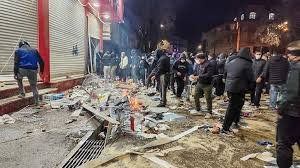
Through social media, videos and images came to light depicting thousands of people surrounding the streets of Tehran, and big meetings on the Ayatollah Kashani Boulevard in the northwestern part of the city, as reported by AFP. Besides, protests were also witnessed in other towns like Abadan in western Iran.
There were some posts on X that reported security forces had been sent running and government properties had been set ablaze during the protests in Tehran and Mashhad on Thursday night. However, such rumors could not be confirmed by any means.
Protests spread nationwide
HRANA has communicated that during the protests, which were reported to have been held in at least 46 cities of 21 provinces, the exercise of voicing discontent was observed on Thursday. In the Kurdish areas, the shutdown of markets was also reported, with a number of cities in the Kurdistan region, West Azerbaijan, Kermanshah, and Ilam provinces participating in the strikes.
The human rights organization claimed that during the most recent nationwide crackdown, there were at least 60 more people detained, thus raising the cumulative number of arrests since December 28 to over 2,277. Among those detained, at least 166 are reportedly minors and 48 are university students. HRANA also alleged that Iranian state media has broadcast at least 45 forced confessions since the unrest began.
Nationwide internet blackout
Internet monitoring group NetBlocks said live data indicated a countrywide internet shutdown in Iran.
“The incident follows a series of escalating digital censorship measures targeting protests across the country and hinders the public’s right to communicate at a critical moment,” the watchdog said.
The blackout drew condemnation from exiled Iranian crown prince Reza Pahlavi, who accused the government of silencing dissent by cutting internet access and attempting to jam satellite signals. He urged European leaders to support the Iranian people and called on them to follow US President Donald Trump’s lead in holding the Iranian leadership accountable.
Trump issues warning
Amid the escalating unrest, US President Donald Trump issued a stern warning to Iran, threatening severe action if authorities “start killing people.”
“If they do, we will hit them very hard,” Trump said, adding to mounting international pressure on Tehran as the crisis deepens.