
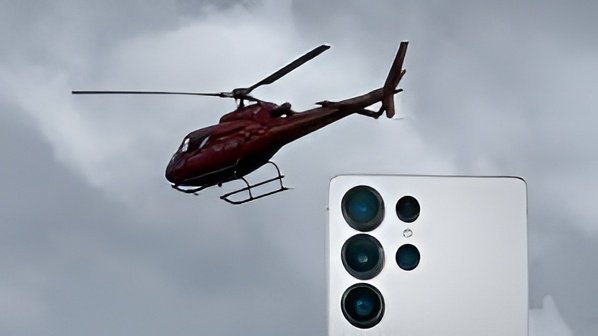
Smartphone cameras have become one of the most decisive factors for buyers, especially in the flagship Android segment. The current smartphones enable users to take professional-quality photographs through their system of various lenses and large image sensors and their advanced software processing capabilities. To see how well those claims hold up under extreme conditions, three leading Android phones were put to the test — from the air.
During the helicopter tour which covered the Hoover Dam and Grand Canyon and Las Vegas Strip three smartphones which included the Honor Magic 8 Pro and Samsung Galaxy S25 Ultra and Google Pixel 10 Pro XL were evaluated for their image quality and zoom capabilities and dynamic range performance and ability to handle motion.
The Contenders
The Honor Magic 8 Pro uses 50MP sensors for its main camera and ultrawide camera and selfie camera while its 200MP telephoto lens delivers 3.7x optical zoom. Samsung’s Galaxy S25 Ultra comes with a 200MP main camera and a 50MP ultrawide camera plus dual telephoto lenses which provide 3x and 5x optical zoom and a 12MP front camera. Google’s Pixel 10 Pro XL uses a balanced design which includes a 50MP main sensor and two 48MP ultrawide and telephoto cameras plus a 42MP selfie camera.
The initial assessment of performance uses megapixel counts as a standard measurement but real-world results depend more on three factors which include processing and stabilization and light handling capabilities of the equipment that was examined during testing.
Selfies Before Takeoff
The three phones produced good selfies before their launch but showed different results. The Pixel 10 Pro XL performed best in high-contrast lighting situations because it maintained facial details while preventing highlight loss. The Pixel smartphone emerged as the top choice for front-facing photography because both Samsung and Honor smartphones experienced difficulties in bright sunlight conditions.
Hoover Dam and Canyon Landscapes
Shooting through helicopter windows at speed posed an immediate challenge. At the Hoover Dam, only Samsung and Honor could be tested due to time constraints. While Honor captured slightly more fine detail, Samsung’s images stood out for richer tones and more accurate color reproduction.
Inside the Grand Canyon, all three phones were tested across multiple zoom levels. Honor’s ultrawide shots were visually striking, delivering punchy colors, while Samsung produced more natural-looking images. The Pixel lagged behind, with flatter colors and less visual depth.
At higher zoom levels, both Samsung and Honor offered usable results up to 30x. The Pixel was limited to 30x zoom and failed to match the detail captured by the other two. Beyond that, extreme zoom performance deteriorated across devices.
Dynamic Range and Macro Performance
When shooting backlit scenes, the Pixel 10 Pro XL redeemed itself. It handled difficult lighting conditions better than Samsung and Honor, both of which struggled with blown highlights. In macro photography, Honor and Pixel produced pleasing background blur, while Samsung retained more depth — a stylistic choice that may not appeal to all users.
Capturing Motion Mid-Air
The test required us to photograph a second helicopter at 120 mph to determine the system’s autofocus and stabilization performance limits. Samsung achieved the best overall performance under extreme conditions because its results showed better focus and less motion blur compared to other phones. Honor captured clearer branding details, while Pixel trailed slightly behind.
Sunset and Cityscapes
The helicopter returned to Las Vegas at sunset and all three phones showed impressive performance. The images from Samsung achieved superior detail and precise color reproduction whereas Honor excelled in the final cityscape shots which displayed vibrant lights and deep contrast throughout the Strip.
Final Verdict
The three smartphones demonstrated exceptional performance capabilities while testing their abilities in one of the most difficult photography conditions. The Google Pixel 10 Pro XL delivered impressive results for selfies and dynamic range testing but lacked sufficient functionality for diverse usage needs.
The Samsung Galaxy S25 Ultra demonstrated better performance than its competitor because it provided users with dependable results throughout all testing conditions which included landscapes and zoom and motion and low light situations. The Honor Magic 8 Pro achieved second place because it produced vibrant colors and its zoom capabilities matched those of competing devices.
The Galaxy S25 Ultra functions as the top Android camera phone because it gives users all necessary camera functions while Honor has emerged as a major contender in this industry.