
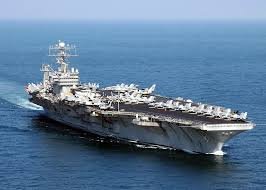
The USS Abraham Lincoln and its strike group display their most rigorous electronic silence operations which modern naval warfare currently permits due to rising geopolitical tensions in the Middle East. The US Navy operates its nuclear-powered aircraft carrier in the Arabian Sea through traditional navigation methods which use basic technology and modern precise equipment because GPS signals face jamming attacks and radar emissions reveal its location.
The Abraham Lincoln operates in the world’s most active and delicate maritime region through its navigation systems which do not use GPS or active radar.
A Revival of Celestial Navigation
The carrier’s navigation teams returned to celestial navigation because satellite navigation systems face jamming and spoofing risks. Quartermasters use traditional sextants to measure star angles in relation to the horizon. The ship’s exact position is determined through manual processing of these readings. The method from centuries ago which withstands cyber attacks presents a dependable solution for situations when digital systems become unreliable.
Passive Sensors Over Active Radar
Instead of broadcasting radar signals that could reveal its location, the Abraham Lincoln relies on passive sensor systems. The SLQ-32 electronic warfare suite serves as the main system which uses its “listening” capability to detect radar signals from other ships and radio signals from civilian aircraft. The ship uses signal analysis to create an immediate operational view of its environment which requires no electronic devices to be detected.
Precision Through Dead Reckoning
When cloud cover blocks celestial fixes and emissions control rules out radar, navigators turn to dead reckoning. This mathematical technique calculates the ship’s position using its last confirmed location, speed, heading, time elapsed, and environmental factors like currents and wind. The method achieves modern accuracy standards which maintain positional errors below three hundred yards throughout extensive distances.
Escort Ships as a Collision Shield
Operations in shipping lanes without AIS transponders create increased danger of collisions according to the United States Coast Guard. The USS Spruance and other escort destroyers protect the carrier by moving ahead of its path like protective “sheepdogs” which provide security for the vessel. The ships use their warning system to protect civilian vessels which enables the carrier to maintain its hidden position while avoiding unintentional contact with other ships.
Human Vigilance Takes Center Stage
During these stealth transits, technology gives way to human observation. The ship has additional “Vampire” lookouts who use advanced night-vision equipment to monitor their designated areas. The team must identify any small boats or fishing vessels or floating hazards which passive sensors cannot detect because human vision serves as their main safety measure.
Communication Without Radio Waves
The strike group maintains complete radio silence because it does not use any conventional voice communication methods. The system operates by using Aldis lamps which project directional flashing lights together with secure laser communication systems. The system uses narrow beams which only intended recipients can see to enable precise coordination while remaining undetected by hostile monitoring systems.
Managing the Carrier’s Wake
Satellites can detect the huge wake of a supercarrier even when it operates in complete electronic stealth. The Abraham Lincoln uses speed management to decrease operational risks because the ship needs to maintain a speed below 10 knots during daylight and satellite tracking periods. The ship uses this method to limit visible disturbances which enable it to merge with the natural appearance of ocean waters.
Old Skills, Modern Stakes
The joint military operations of US forces with their partner nations in Afghanistan during Operation Enduring Freedom demonstrate how warfare between rival countries through their military forces has become obsolete. The US Navy has shown through its operations that human operators can control advanced technology systems better than using the systems’ automated functions.



Women’s Reservation Bill Fails in Lok Sabha; Rahul Gandhi Slams Centre, Credits Opposition Unity