
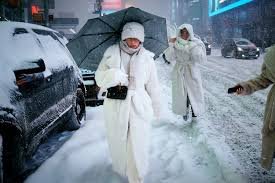
The United States is currently experiencing a severe winter storm that has resulted in 25 confirmed deaths while more than 500000 residents lost power due to the combination of heavy snow and freezing rain and severe cold weather that extended from the southern states to the northeastern regions.
The powerful storm system moved eastward through the United States Northeast on Monday while Southern states worked to recover from the destruction caused by severe ice storms. Authorities reported widespread disruption to daily life because road closures and flight cancellations and extended power outages affected their operations.
The National Weather Service reported that over a foot of snow accumulated throughout the 2100-kilometre area which extends from Arkansas to New England. The area north of Pittsburgh received 20 inches of snow while wind chills reached minus 31 degrees Celsius during late Monday and Tuesday.
Power outages and infrastructure damage
As per the data displayed on PowerOutage.com, by Monday afternoon more than 750k homes and businesses in the United States suffered power outages. The South suffered the most severe damage from the storm which affected northern Mississippi and certain areas of Tennessee through freezing rain that broke power lines and trees.
Mississippi officials described the storm as the state’s worst ice event since 1994. Emergency teams established warming centres while they distributed blankets and bottled water and generators to help residents who faced power outages.
University of Mississippi officials canceled all classes for the week because ice covered most of the campus in Oxford. According to Mayor Robyn Tannehill, the roads that looked like walkways under rainfall felt torn-down by the wind causing trees and powerlines to fall hard on them.
Travel chaos across the U.S.
The entire U.S. flight system operated with major disruptions because FlightAware reported over 8000 flights which experienced delays and cancellations on Monday. The COVID-19 pandemic brought about its most extensive flight cancellations on Sunday when nearly 45 percent of all scheduled U.S. flights were canceled according to aviation analytics company Cirium.
Snow-covered highways and icy streets across multiple states created hazardous travel conditions which caused road closures and emergency response teams to experience delayed times.
Rising death toll
The storm resulted in multiple deadly events which caused the death toll to increase. The snowplow accidents in Massachusetts and Ohio resulted in the deaths of two people. The authorities confirmed that two sledding accidents in Arkansas and Texas resulted in the deaths of teenage victims. The police in Kansas found the 28-year-old teacher dead who had gone missing from a bar after she left without her phone and coat.
New York City officials reported that at least eight people were found dead outdoors during the frigid weekend, though investigations into the causes of death are ongoing.
The storm caused additional deaths in Louisiana Pennsylvania Tennessee Mississippi and New Jersey as it moved through various areas.
Bitter cold tightens its grip
The Midwest and South and Northeast regions experienced their coldest temperatures after the storm ended. The meteorologists predicted that the Lower 48 states would record their lowest average temperature for the day at minus 12.3 degrees Celsius which would be their lowest record since January 2014.
Nashville in Tennessee restored electricity to thousands of customers yet over 170000 customers remained without power throughout the night. The city experienced a rapid increase in hotel occupancy because residents needed shelter from their unheated homes.
The weather conditions improved in some areas but officials warned that hazardous weather and dangerously low temperatures would continue to exist which required residents to avoid travel while implementing safety measures to keep warm.




Women’s Reservation Bill Fails in Lok Sabha; Rahul Gandhi Slams Centre, Credits Opposition Unity