
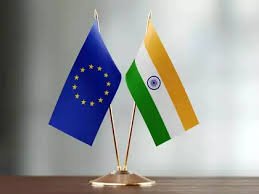
India and the European Union have announced the conclusion of what officials describe as a landmark free trade agreement (FTA), often called the “mother of all deals.” The new arrangement has created doubts about the possibility of Turkish goods accessing the Indian market through indirect means.
The government officials confirmed that Turkish products will not receive special trade benefits to enter India through the India–EU FTA treaty. While Indian goods exported to the EU can subsequently move into countries linked to the EU through customs arrangements, the same benefit does not apply in reverse for Turkiye.
“Turkiye is not a party to the India–EU FTA. As a result, Turkish exports cannot enter India with duty concessions under this agreement,” an official explained, requesting anonymity. Goods shipped through EU member states will retain their Turkish origin designation which makes them ineligible to satisfy the origin requirements established by India’s trade agreement with the EU.
The Customs Union agreement between Turkiye and the European Union has existed since 1996. The existing system requires Turkiye to implement all components of the EU’s common external tariff system. The EU grants India tariff reductions through its FTA agreement which requires Turkiye to provide identical tariff reductions for Indian products that enter its market.
However, the Customs Union does not provide Turkiye with reciprocal rights in India’s FTAs. The arrangement covers industrial goods and certain processed agricultural products but excludes primary agriculture, services, investment, government procurement and digital trade.
India and the EU announced the successful conclusion of FTA negotiations earlier this week, with the agreement expected to be formally signed and implemented within the year. Once operational, the pact will offer preferential access on 96.8% of tariff lines, covering nearly all of India’s exports to the EU by volume and over 90% by value.
Trade experts have reiterated that Turkish goods cannot use the India–EU agreement to bypass tariffs. The Global Trade Research Initiative’s cofounder Ajay Srivastava stated that Turkish products which pass through EU ports remain Turkish products and thus fail to meet the requirements for duty-free access under the India–EU FTA.
The diplomatic ties between India and Turkey face challenges because Turkey supports Pakistan and has publicly condemned India’s counter-terror operations which occurred during Operation Sindoor in May.
Recent trade data reflects this cooling relationship. India’s exports to Turkiye decreased by 14.1% reaching $5.71 billion for the 2024-25 period while imports dropped by 20.8% to approximately $3 billion. The present share of Turkiye in India’s overall exports stands at 1.3%.
India exports to Turkiye essential products which include mineral fuels electrical machinery automotive parts and vehicles pharmaceuticals chemicals textiles plastics rubber materials and iron and steel products. Imports from Turkiye largely consist of marble, apples, gold, cement, mineral oils, chemicals, pearls and iron and steel.



Women’s Reservation Bill Fails in Lok Sabha; Rahul Gandhi Slams Centre, Credits Opposition Unity