The US President Donald Trump has reinforced his desire to take over Greenland, saying that there would be no retreat in the matter, despite the fact that the leaders of Europe were not happy with what they called the “law of the strongest” politics.
In his Tuesday speeches and social media activities, Trump did not exclude the military option for the taking of the Arctic island, which is presently an autonomous area under the Kingdom of Denmark and thus a NATO country too. This has increased the disagreements between the two continents and led to further speculation about the NATO alliance’s future.
After having a call with NATO Secretary General Mark Rutte, Trump wrote on his Truth Social platform that Greenland is “vital for national and world safety” and maintained that “there can be no return” of his stance.
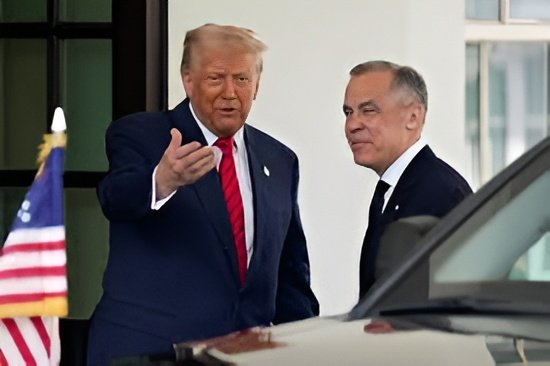
When at a press conference in the White House, Trump was asked how far he would go to get Greenland, he said, “You will see.”
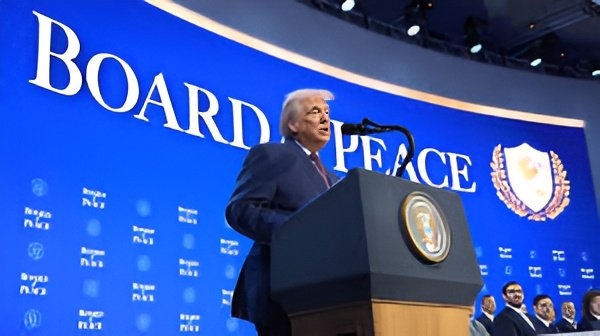
Although the harsh language was used, later Trump changed his tune and sounded softer, proposing that still a meeting of the minds could be achieved. He stated “something will work out where NATO is going to be very happy and where we’re going to be very happy” before his meetings with European leaders at the World Economic Forum in Davos.
Trump’s fascination with Greenland brought about a sigh of fear among the European capitals. Critics’ opinions are that the risk of the United States’ alienation of the European Union is very high and its consequences might defeat the very purpose of NATO which has been at the heart of Western security for decades. Additionally, the whole saga has led to the revival of fears of trade tensions between the U.S. and the E.U., reminiscent of last year’s global market troubles.
Trump’s demands have been emphatically rejected by both Denmark and Greenland. The leadership of Greenland has been very vocal in the fact that the island is not for sale, while Danish Prime Minister Mette Frederiksen has made it clear that Copenhagen will not surrender to the point of pressure.
“The American president has unfortunately not ruled out the use of military force, and therefore the rest of us cannot rule it out either,” Frederiksen cautioned the press, indicating how seriously Denmark is taking the issue.
While things have not been very smooth, some European nations advocated a deal on Arctic and North Atlantic security via negotiations. The President of Lithuania, Gitanas Nausėda, stated that the sharing of responsibility for the security of the region could help to cool down the tensions.
The World Economic Forum in Davos saw the European leaders trying to give off a vibe of being united and being resolute. “The European Union stands for, and the French, too; cooperation and mutual respect over intimidation,” remarked the French President Emmanuel Macron.
“We want growth and stability in this world,” Macron said, “but we prefer respect to bullying.”
President Ursula von der Leyen of the European Commission voiced similar thoughts, and among the world’s leaders, she was the one that described the geopolitical period as one of “seismic change” and the new European strategic independence as a necessity that includes the U.S. security reduction.
While the discussions among the economic and political elites in Davos are ongoing, Europe has to work hard to react decisively to Washington without cutting the more than fifty years long tie that still has its most serious strains in recent years.