
Supreme Court Approves Government’s 100-Metre Aravalli Rule Despite Panel Objections

In a remarkable step for environmental regulation, the Indian Supreme Court has granted the 100-metre rule of the government for Aravalli Hills, ignoring the objections of its own committee, the Central Empowered Committee (CEC).

Background

The dispute is about on what basis the Aravalli Hills are and what environmental laws do they get protection under. The Ministry of Environment, Forest and Climate Change (MoEF & CC) put forward a plan in October 2025 to the effect that only hills having a height of more than 100 metres would be recognized as Aravallis for the purpose of regulation. This regulation in effect denies lower hills the right to some of the protective measures.

The Forest Survey of India (FSI) had previously described Aravallis using a 3-degree slope rule, which encompassed smaller hills and lower ranges of the Aravalli system. In doing so, the environmentalists and ecologists pointed out that cutting off at a height of 100 metres could mean that lower hills, which are ecologically very sensitive, would not receive protection, which in turn could harm the biodiversity, water resources, and ecology in the region.

Panel’s Position

On October 14, 2025, the CEC, the Supreme Court-appointed panel that monitors environmental compliance in sensitive areas, clarified in a letter to the court’s amicus curiae that it did not examine or approve the government’s new 100-metre definition. The CEC emphasized that FSI’s slope-based definition should be adopted to ensure comprehensive protection of the entire Aravalli range.

Supreme Court Decision

Even though the Chief Election Commissioner brought up several issues, the Supreme Court approved the government’s suggestion and legalized the 100-meter rule. Consequently, for the sake of law and administration, the hills with a height of 100 meters or above alone will be regarded as Aravalli Hills and thus be protected from the environmental rules applicable to them.

Implications

The decision has generated mixed reactions:

  • For the supporters, the 100-metre rule is something that gives certainty and uniformity not only for development but also for regulatory enforcement.
  • On the other hand, environmentalists are saying that by not considering the lower hills the mining, which is quite likely going to be the case, will not be checked, construction will come and there will be further destruction of the already small but ecologically important hill ranges.

Current Status

The 100-metre Aravalli rule has been acknowledged and officially recognized but still, there is an ongoing discussion about its long-term environmental impact especially in terms of water recharge areas, forests and biodiversity hotspots in the lower Aravalli areas.


Budget 2026 income tax expectations rise as taxpayers seek relief, clarity and simpler rules

Taxpayers track expectations ahead of Union Budget 2026 as income tax relief and simplification take centre stage.

The Union Budget 2026–27 countdown has started and taxpayer expectations continue to rise. Finance Minister Nirmala Sitharaman will deliver her ninth consecutive Budget presentation on February 1 which marks the third full Budget of the Modi

High-speed rail corridor cleared; E Sreedharan to spearhead project planning

Representative image of a high-speed train symbolising Kerala’s proposed new rail corridor led by E Sreedharan.

The Centre has approved a high-speed rail corridor which will deliver extensive rail infrastructure improvements throughout Kerala. The initial planning work will be conducted by E Sreedharan who is known as the ‘Metro Man’ while the

IndiGo Vacates 717 Domestic Airport Slots After DGCA Curbs Winter Operations

An IndiGo aircraft at an Indian airport after the airline vacated multiple domestic slots following DGCA’s winter schedule curtailment.

IndiGo has vacated 717 take-off and landing slots across domestic airports after aviation regulator DGCA ordered a 10% cut in the airline’s winter schedule, following major operational disruptions in early December, sources said. Slots — which

Steel Sector Cartelisation Under CCI Scanner

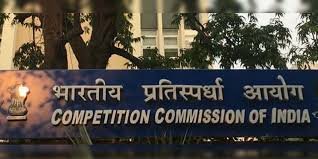
The Competition Commission of India headquarters in New Delhi amid an ongoing antitrust investigation into major steel producers.

Indian steelmakers Tata Steel JSW Steel Steel Authority of India Limited SAIL and Rashtriya Ispat Nigam Limited RINL face investigation because antitrust authorities discovered evidence of their alleged cartel activities according to a report reviewed by

Union Budget 2026: Logistics Sector Demands ₹3 Trillion Allocation

Logistics industry leaders call for higher infrastructure spending in Union Budget 2026 to strengthen supply chains and economic growth.

The Logistics Sector Skill Council (LSC) demands the Centre to spend ₹3 trillion on infrastructure projects which require extensive changes and increased financial funding for the industry. The council mentioned in its statement that the previous

IndiGo to Surrender Unused Airport Slots Amid Operational Reset

An IndiGo aircraft at an airport, as the airline undertakes operational changes and returns unused flight slots.

IndiGo, which operates as India’s biggest airline, will return its unused airport slots after the company decided to stop operations because of regulatory violations which occurred during the previous month. The airline received a flight reduction

Advertisement

Recommended For You