The troops’ withdrawal of the United Arab Emirates (UAE) from Yemen has been made public and it has also brought to an end the “counterterrorism” operation which was merely a cover for their real aims. This situation is a consequence of the discord between the UAE and Saudi Arabia over the Southern Transitional Council (STC).
As a result, there was a Saudi airstrike on the southern city of Mukalla which the government of Riyadh claimed was an attack on an arms shipment to the STC, a separatist group favored by Abu Dhabi. Saudi Arabia put the blame on the UAE for inducing the STC to take military actions against Yemen’s internationally recognized government thus creating a situation that put the latter’s national security at risk.
In response, Yemen’s presidential council dissolved a defence pact with the UAE and ordered Emirati forces to leave within 24 hours. Saudi Arabia endorsed the withdrawal and demanded that the UAE halt all military and financial support to any Yemeni faction.
According to the UAE Ministry of Defence, a thorough evaluation was performed and the decision to terminate the operations was made “in such a way that the safety of the personnel is ensured,” while it continued to reinforce its support to the region which is security ridden. Abu Dhabi refused the claim that the cargo was an arm shipment for the STC and maintained that the cargo was for its forces.
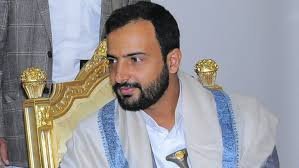
The STC, which this month took over the southern regions including Hadramout and Mahara, has turned down the government’s request to retreat. The STC’s frontman Anwar al-Tamimi labeled the government’s demand “unreasonable” and vowed to continue their battle.
Qatar, the country bordering the one making the statements, was happy with the comments coming from the coalition, particularly the Saudi and UAE ones, as these exhibited both countries’ commitment to the region’s tranquility and to the GCC principles. Besides local talks, the Saudi foreign minister had a meeting with the U.S. Secretary of State and then with the Pakistani Foreign Minister about the regional situation.
The picture drawn shows a split that has become larger in the coalition that is led by Saudi Arabia and was formed back in 2015 to struggle against the Houthi rebels, who are at present in control of large areas of northern Yemen. The situation has become more complex due to UAE’s partial withdrawal in 2019 and the subsequent STC offensive and Mukalla airstrike.
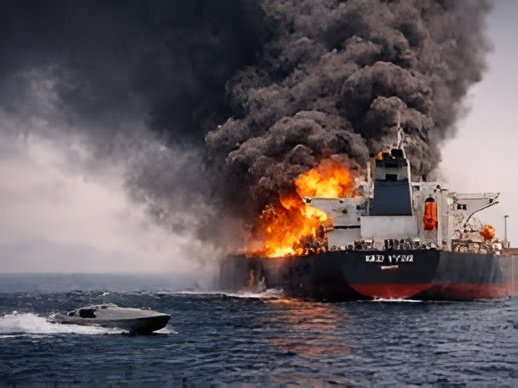
Yemeni state media has reported that a blockade on ports and crossings is accompanied by a 72-hour no-fly zone, while rising black smoke was observed in Mukalla as a result of the Saudi strike. The STC remains unyielding, saying that it will not only hold but also expand the area of the newly conquered lands.