The favorable time when the Sun moves into Capricorn signifies not only an astronomical change but also a viewpoint of India’s abundant cultural diversity. Makar Sankranti celebrated as Bhogi is a very important day, as it signifies the coming of new grains to the houses and the farmers’ celebration of the rich harvest. The whole festival is a transition from the sacred bonfires to the playful tradition of Bhogi fruits, and it is infused with the warmth and affection of hearts.
What Makes Bhogi Special?
Bhogi is an major festival in the Indian subcontinent that begins with the lighting up of bonfires at the dawn of the day. The fires which are lit high symbolize the people’s hopes and renew their spirits as well as the victory of light over darkness. It is during this day that cow dung cakes and the wood of the uprooted houses are made the sacrifice. People believe that the air is cleansed by the smoke since the bad microbes are killed, so, health is favored.
The fire at the mountain top is a symbol of the negativity burning—old ideas, vices, rage, envy, and pride—eliminated and therefore, making room for the good and progress. K. G. Karmakar and others portray Bhogi as an occasion of cleansing not just for the environment but also for ourselves, and hence, giving birth to new and vibrant energy. On that very day, Lord Indra is venerated as a sign of thankfulness for the rain that fell at the right moment and the plentiful harvest that was reaped.
The Significance of Bhogipandlu (Bhogi Fruits)
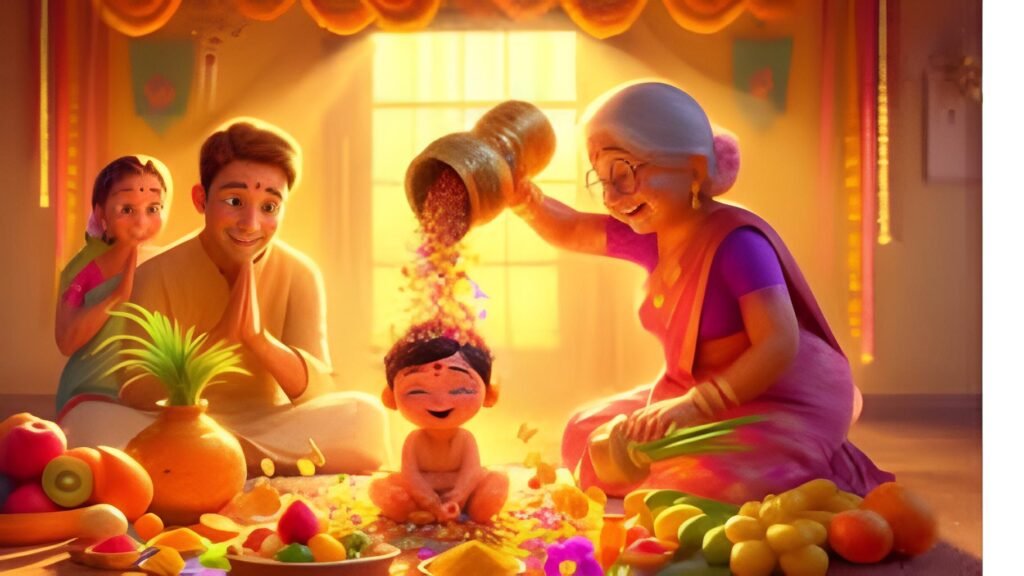
Bhogipandlu is one of the major rituals of Bhogi and most people consider it the most important custom of Bhogi. The kids are blessed in the ceremony and relatives and friends get together to throw at them plums (badari fruits), small coins, akshats (rice grains), and flower petals.
The tradition is believed to eliminate the evil eye on the kids and, in return, attract God’s favor.Badari fruits, commonly called plums, are the favorites of Lord Vishnu. They are said to take away the negativity and give the person the blessings of Sri Mannarayana when throwing these fruits. The ritual indeed brings a charge of positive vibes and happiness, which unites the different family members through love and care.
Old tales narrate that the seers Nara and Narayana went through harsh ascetic practice in the woods of Badari. The deities were extremely gratified with the two’s loyalty, thus, they blessed the yogis with plums in the form of rain. Since children are incarnations of Narayana, this custom of throwing fruits during Bhogi is thought to be traced back to that story.
From a symbolic and scientific standpoint, the delicate top of the child’s head, known as Brahmarandhra, is slightly activated by the pleasant smelling fruits; this is thought to be a factor in mental and overall health development. The small, round red plums are the representation of the Sun, and because they provide Vitamin C, they will also help prevent diseases and promote better digestion.
Unconsciously, the little ones will be the reason for their good health while tasting the fruits. Ultimately, the ceremony is an expression of the collective favors—long life, happiness, and prosperity for kids, hence Bhogi is not only a festival but also an occasion of joy, tradition, and holistic health.