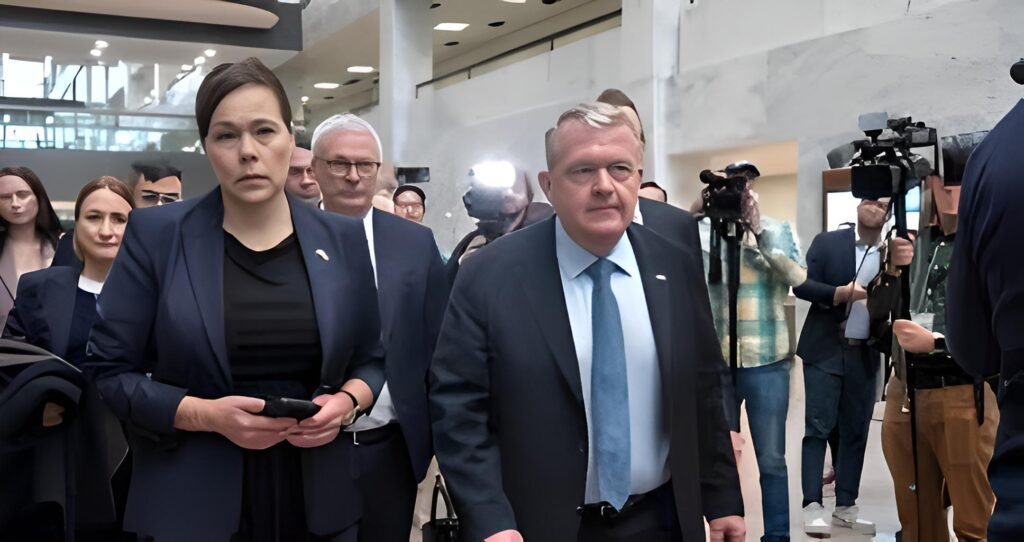
Denmark has proposed launching a NATO surveillance mission in Greenland, with the backing of the Arctic island’s authorities, Danish Defence Minister Troels Lund Poulsen said on Monday following talks with NATO Secretary General Mark Rutte.
Speaking to Danish television after the meeting at NATO headquarters in Brussels, Poulsen said the proposal had been formally raised and positively acknowledged. “We have put the idea forward, the secretary general has taken note of it, and we now hope to define a clear framework for how it can be implemented,” he said.
The decision was made against the background of increased diplomatic tensions between Europe and America caused by U.S. President Donald Trump’s threats to annex Greenland, a semi-autonomous territory of Denmark, for reasons of strategy and security. European partners have more and more opposed the U.S. discourse, united in the defense of Denmark’s sovereignty.
NATO chief Mark Rutte said on X that discussions with Poulsen and Greenland’s Foreign Affairs and Research Minister Vivian Motzfeldt focused on the strategic importance of the Arctic region. “We discussed how important the Arctic — including Greenland — is to our collective security,” Rutte wrote, adding that NATO allies would continue to work together on these issues.
Trump’s stance has drawn sharp criticism across Europe. German and French leaders over the weekend condemned his threats to impose tariffs on countries opposing his Greenland plans, describing the move as political “blackmail.”
Support for a stronger NATO presence in the High North has also come from Nordic partners. Sweden’s Defence Minister Pal Jonson said a NATO surveillance mission could offer a constructive path forward as concerns grow over increased Chinese and Russian activity in the Arctic.
“We are looking at the most effective way to strengthen the alliance’s footprint in the High North,” Jonson said after a meeting of Nordic defence ministers in Brussels.
As diplomatic tensions persist, Denmark’s proposal signals a broader European effort to reinforce Arctic security through collective NATO mechanisms rather than unilateral action.