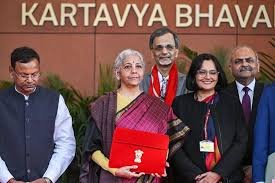
The Union Budget 2026–27 announcement by Finance Minister Nirmala Sitharaman on Sunday allocated ₹12.2 lakh crore for capital expenditure which demonstrates the government’s commitment to infrastructure development during times of worldwide economic instability.
The proposed capex shows a consistent upward trend because it exceeds the previous year’s ₹11.2 lakh crore through its current value which demonstrates the Centre’s intention to use public funding as a means to attract private investment and create job opportunities while enhancing lasting productivity growth.
Ninth Consecutive Budget, A Historic First
Sitharaman made history today by becoming the first finance minister in India to present nine consecutive Union Budgets which brought her closer to the record of 10 Budgets held by former Prime Minister Morarji Desai.
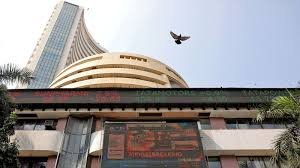
The upcoming Budget 2026 marks a historic milestone as it becomes the first Union Budget to be presented on a Sunday in independent India. To allow immediate market response, the BSE and NSE operated special trading sessions, a rare move in Indian market history.
Infrastructure Push Deepens
Sitharaman announced increased capital expenditures because she demonstrated that public capital spending increased from ₹2 lakh crore in 2014–15 to ₹11.2 lakh crore in FY26 while the government plans to increase spending to ₹12.2 lakh crore in FY27 to maintain economic growth.
The government will establish an Infrastructure Risk Guarantee Fund to provide public credit guarantees which reduce construction project risks for lenders and developers. The Budget also proposed accelerating asset monetisation through dedicated REITs for CPSE real estate assets.
Focus on Manufacturing, Technology and Strategic Sectors
Government Save Money Through Efficiency.
- Scaling up manufacturing in seven strategic sectors
- Strengthening MSMEs and industrial clusters
- Expanding infrastructure and logistics
- Enhancing long-term economic security
The Finance Minister also announced:
- Expansion of the India Semiconductor Mission (ISM 2.0)
- Support for rare earth corridors in Odisha, Kerala, Andhra Pradesh and Tamil Nadu
- A ₹10,000 crore ‘Biopharma Shakti’ programme to build India as a global biopharma hub
Reform Agenda and ‘Viksit Bharat’ Vision
Sitharaman confirmed that the government will continue its reform initiatives while explaining that more than 350 reforms have been executed since 2025, which included GST simplification and labour code notifications and compliance reduction.
India will proceed with its Viksit Bharat mission by making progress through international trade and investment stability according to her statement.
Global Headwinds, Domestic Priorities
The Budget arrives during a period of worldwide trade interruptions while the United States has increased tariffs on Indian goods which makes it essential for the government to establish its economic credibility through clear policy statements. Investors and industry are closely tracking signals on:
- Fiscal deficit consolidation
- Borrowing roadmap
- Tax reforms under the New Income Tax Act, 2025
- Continued support for railways, defence, AI and clean energy
What Lies Ahead
The increased capital expenditure demonstrates that the company will maintain its current operations but market experts will base their predictions on three factors which include the execution details and private capital investments and sector distribution choices. Budget 2026 establishes India’s medium-term growth strategy through its focus on infrastructure development and manufacturing and technological advancement.