Hyderabad is a city where opposites coexist. The Old City has its quaint little streets that are full of morning activities and from shifting vendors to people using the streets’ in and out everyday, and then there’s the IT corridor in the west where everything is done electronically—swiping in, long commuting, and working in the hi-tech offices. For a long time, these two worlds enjoyed the same space but remained separated by ease of access.
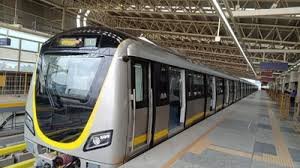
Now Telangana state is putting all its efforts to replace the Metro Rail’s old Phase-I through taking control of it, which is a very ambitious step. The government has given a nod to the acquisition of the 90% share of Larsen and Toubro (L&T) at the rate of Rs 2,000 crores while taking over the Rs 13,000 crores debt of L&T. The acquisition that is to be executed by way of forming a government-controlled Special Purpose Vehicle (SPV) is expected to see the light of day by the close of FY26.
K. Ramakrishna Rao, Chief Secretary stated that the procedure would involve all the legal and statutory requirements. Officials envision the Metro under the government’s control not just as a commuting service but rather a public utility that connects the entire city of Hyderabad with jobs, services, and neighborhoods.
Phase-I and Its Impact
The first phase of the Metro covers a distance of 72 km through three corridors and is based on a public-private partnership (PPP) model. The operations started in November 2017 and were finished in February 2020. Public transport experts highlight the Metro’s efficiency: operating 1 km of Metro replaces seven bus lanes or 24 car lanes. Environmental safeguards have been maintained through tree translocations and the planting of saplings under the Haritha Haram initiative.
Phase-II Plans
Phase-II aims to expand the network by 76.4 km across five corridors at an estimated cost of Rs 24,269 crore. The expansion focuses on connecting underserved areas of the Old City with major employment hubs in the western and northern parts of Hyderabad, facilitating access to education, healthcare, and workplaces. The plan has been suggested to be a collaborative effort involving the state and the central governments as per the Telangana Rising framework, which presents the state’s ambition to be a $3 trillion economy by 2047.
The Chief Minister A. Revanth Reddy has forwarded his proposals for the Metro Phase-II project together with other infrastructural development projects, such as the Regional Ring Road n and high-speed corridors connecting Hyderabad with other big cities. Nevertheless, the delays in giving approvals have attracted negative comments, Congress MLC Vijayashanti has been asking the central authorities to hurry up with the clearances.
Inclusivity and Safety Initiatives
Hyderabad Metro is also prioritizing inclusivity and commuter safety. Recently, 20 transgender personnel were inducted into HMRL’s security workforce, joining previous hires in traffic management. Women make up about 30% of Metro passengers, and the new recruits will assist with safety, guidance, and security, reflecting the Metro’s commitment to social empowerment.
Reconnecting the City
Hyderabad’s location, in a way, reflects its societal and economic divides. The Metro is regarded as a significant instrument for unifying the mobility planning, limiting the private motor vehicles usage, and facilitating inter-neighborhood access. Dialogues with lenders like HUDCO are in the process for financing the extension together with the necessary infrastructure works.
The risks are great: the Metro has been assigned an extra role apart from carrying passengers and that is it has to reunite a city pull apart by roads, join heritage paths and modern technical poles, and guarantee that the growth of Hyderabad will be shared by all and will easily be reached.