
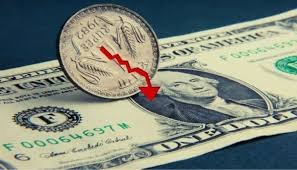
The Indian rupee’s value decreased greatly on Wednesday, as it lost first 61 paise in the morning and then hit a remarkable low of 91.58 per US dollar, which is the continuation of the currency’s devaluation because of the persistent global and local difficulties.
A day before, the country’s money had already fallen to a historic low of 90.97, following a 7 paise drop, caused by the dollar’s demand from metal importers and the outflow of foreign funds. The rupee has lost close to 5% of its value in 2025 to date, which is a clear sign of the increasing pressure on currencies in emerging markets.
Traders in the foreign exchange market pointed the finger at the rising geopolitical risks and the US’s renewed easing policies that are causing the aversion to risk to spread globally as the main reasons for the rupee’s latest fall. The local stock market, which was already weak due to the constant selling by foreign investors, worsened the situation even more and was thus contributing to the negative perception of the rupee.
The rupee, which had been under a lot of pressure lately, has been setting new lows. On just a day before, on December 16, 2025, the rupee dropped to 91.14 during the day and 90.93 at close.
According to the data from the National Securities Depository Limited (NSDL) for January, the foreign institutional investors (FIIs) have pulled out more than $2.7 billion from Indian stocks and bonds which also contributed to the rupee’s depreciation.
Ritesh Bhansali, Deputy CEO at Mecklai Financial Services, said there appeared to be mild intervention by the central bank near the 91-per-dollar level. “It seemed like the RBI was trying to protect the 91 mark. Sentiment remains weak with foreign investors selling, equities in the red, elevated government bond yields, and persistent geopolitical uncertainty,” he said.
Another senior trader at a public sector bank noted that the intervention was aimed at slowing the pace of depreciation rather than reversing the trend. “The trader mentioned that the central bank will not likely take drastic measures by burning reserves considering the current strong demand for U.S. dollars.”
The rupee is seen as weaker in the near term exchange market by the investors as global instability, outflow of capital, and low risk appetite are still the major factors negatively affecting the currency.