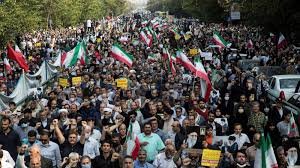
On Sunday, a senior regional official disclosed that Iranian government has confirmed the death toll of at least 5,000 people during protests across the country, among which there were about 500 security personnel. The official linked the deaths to what he called “terrorists and armed rioters,” holding them responsible for the deaths of non-combatants in the violence.
Due to the sensitive nature of the topic, the official using a Reuters source but insisting on anonymity stated that the most violent encounters and the greatest number of deaths were reported in the northwest region of Iran, which is predominantly Kurdish. This region has been a site of conflict with Kurdish separatists for a long time and has been one of the most violent during uprisings in the past.
“The final death toll is not expected to rise significantly,” the official said, alleging that protesters were supported and equipped by Israel and armed groups operating from abroad. The Iranian government has pointed to foreign influence as the main reason behind the protests in the country, and the main enemy of the Islamic Republic, Israel, which attacked Iran militarily in June, is among those most blamed.
On the other hand, independent human rights organizations have published figures that are lower yet still considerable. On the same day, the Human Rights Activists News Agency (HRANA), based in the U.S., disclosed that it had verified 3,308 deaths so far and that an additional 4,382 cases were still being reviewed. HRANA’s figures suggest that the protests have led to more than 24,000 detentions in total.
Hengaw, a Norwegian-based Iranian Kurdish Rights organization, claims that the northwestern Iranian Kurdish area has seen the most fatal clashes and the largest human rights violators’ activities since the protests of late December and that it is a distinct opposite of violence in the region.
Besides, the protests have been a tapped through the support of demonstrations in other countries with the Iranian communities’ presence, for example, and the international media’s constant focus on the magnitude of the unrest and the humanitarian crisis in Iran has, in a way, provided support to the protests all over the world.