
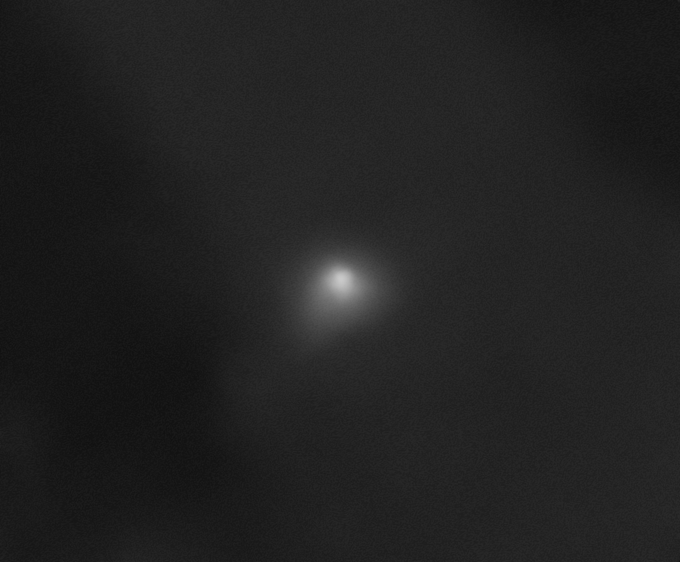
Paged through a global coordination of eight spacecraft, satellites, and telescopes, scientists have revealed the very first high-resolution pictures of the interstellar comet 3I/ATLAS. This is an interstellar object that entered our solar system and went through one of the biggest multi-mission observations ever done to date.
The photos that have just been released give new information about the comet’s structure, composition, and path—making it possible to analyze a guest who came from beyond the solar neighborhood.
Areas of New Knowledge That Come With The New Observations
The data that have been combined show that 3I/ATLAS’s coma and tail are very active, which implies that the comet is made up of volatile materials that are rarely found in solar-system comets. Scientists are also looking at the comet and analyzing how sunlight interacts with the comet’s dust particles, which will lead to the establishment of the comet’s age as well as its chemical history.
Tracking 3I/ATLAS Around The Solar System
The observations were made by a diverse set of platforms, which included space telescopes, Earth-orbiting satellites, and deep-space probes. The combination of these platforms affords multi-angle imaging and spectral data, thus making it possible for astronomers to monitor the evolution of the comet as it hurries towards the inner solar system.
The said researchers consider the collaboration as a necessary step to reveal how interstellar objects are formed, what they are composed of, and how they differ from regular comets, thus making the universe a little bit closer to us in terms of knowledge.