The Indian stock market commenced Wednesday’s trading session quite vigorously as the main indices, Nifty50 and BSE Sensex, started off in the green, reflecting the optimistic global trends. The Nifty50 index passed the 26,000 mark, and the Sensex increased by almost 300 points. At 9:16 AM, the Nifty50 index was at 26,013.30, an increase of 77 points or 0.30%, and the BSE Sensex was at 84,910.64, up by 282 points or 0.33%. Analysts have assured a favorable viewpoint for the local market, thanks to the global indicators, first-rate quarterly earnings, and steady economic data which they see as the main drivers.
Attention of the investors is still directed towards the FOMC meeting of the US Federal Reserve, which is going to be held later in the day, where a 25 basis points rate cut is become the general expectation. According to Dr. VK Vijayakumar, Chief Investment Strategist at Geojit Financial Services, “Global markets are still in the bull run. At present, the US market is the strongest with AI and tech stocks being the biggest beneficiaries. The Fed’s predicted rate cut and the associated conversation of pulling back on the tightening of the money supply will be pivotal for the psyche of the market.” He also mentioned that the 1,300 points gain in Nifty for the October series signals a mild bullishness which might persist into November and thus aiding the index to touch a new all-time high.
Heavyweight stocks like Bharti Airtel, Reliance Industries (RIL), and Larsen & Toubro (L&T) are considered likely to be the ones that provide the strongest backing to Nifty’s rise. In addition, the Nifty Bank index is going through a phase of being fairly priced and improved valuation; hence it is also set to be the leader in the following stage of the market rally.
Turning to the global situation, US stocks hit fresh peaks on Tuesday, with the Nvidia stock advancing after the company unveiled plans for an AI supercomputer for the US Department of Energy. The tech rally was made further by the investor’s buoyant outlook on the upcoming tech earnings reports. The positivity of the Asian markets was reflected in their higher opening due to the Wall Street’s good performance and also the increasing anticipation of a rate cut by the Federal Reserve.
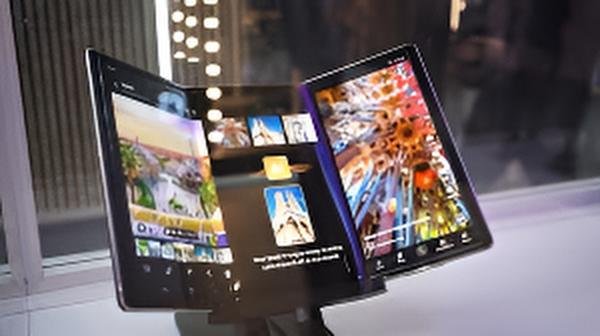
Samsung’s design takes an inward-folding approach, unlike Huawei’s outward-folding models, which helps protect the internal display. Powering the complex structure is a three-part battery system, strategically placed to improve balance and extend power capacity.
The Galaxy Z Trifold is expected to pack Qualcomm’s Snapdragon 8 Elite processor, paired with a 200MP triple rear camera setup — including wide, ultra-wide, and telephoto lenses.
Set to launch later this year in South Korea and China, the device is expected to be priced around $3,000 (₹2.64 lakh). While India’s release date remains unconfirmed, Samsung’s triple-fold marvel could redefine the boundaries of smartphone design and usability.