
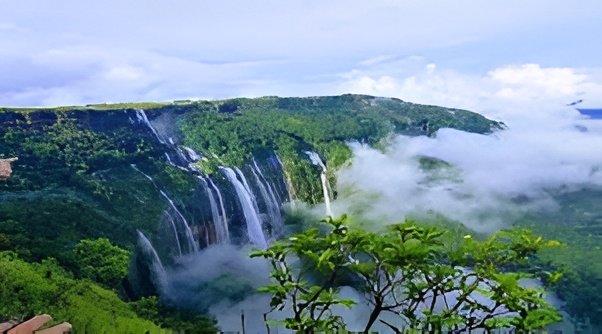
India has a lot of amazing waterfalls, but the Seven Sisters Waterfall in Meghalaya is one of the few that can be a natural spectacle. The monsoon also known as Nohsngithiang Falls, this seasonal marvel divides into seven streams which are side by side during the monsoon period, making it one of the most beautiful and mesmerizing waterfall formations in India.
Location of the Seven Sisters Waterfall
The waterfall can be found in the village of Mawsmai which is very close to Cherrapunji and at the very edge of the Meghalaya Plateau. The waterfall is enveloped by deep valleys and one of the world’s top rainfall places and is still rivalling for an attraction during monsoon season.
Why the Name ‘Seven Sisters Waterfall’?
The waterfall received its name due to the feature of the water dividing into seven separate currents that descend side by side down a wide limestone cliff. This manner of falling brings to mind seven sisters who are standing next to each other—thereby making the waterfall not just one of a kind but also very easy to spot from a distance.
Height and Key Features
Standing at approximately 315 metres, it is one of India’s tallest and most visually striking waterfalls. During the monsoon, the massive rock wall becomes a glowing canvas as the seven streams surge with power and volume.
Best Time to Visit
To witness the full seven-stream formation, the ideal time to visit is June to September. Heavy monsoon showers ensure strong water flow and minimise dry patches, giving the falls their most dramatic appearance.
Geographical Significance
Located along the Khasi Hills escarpment, the waterfall flows over limestone and sandstone cliffs shaped by centuries of rainfall erosion. These natural grooves guide the water into distinct channels, creating the famous seven streams.
How the Seven Streams Form
The cliff’s surface contains natural divisions carved by erosion. As monsoon water hits the rock face, it spreads into these grooves, forming seven parallel streams that appear only during peak rainfall.
Why the Waterfall Disappears in Winter
The Seven Sisters Waterfall is seasonal. When rainfall drops sharply in winter, the water supply feeding the channels reduces significantly, causing the streams to thin or vanish entirely.
Interesting Facts About the Seven Sisters Waterfall
- Among India’s Tallest Waterfalls
At around 315 metres, it ranks among the tallest waterfalls in the country. - Seven Streams Visible Only in Heavy Rain
The seven distinct lines appear only during strong monsoon flow, fading away in dry months. - Located in One of Earth’s Wettest Regions
Cherrapunji and nearby Mawsynram receive record-setting rainfall, providing abundant water to the falls. - Fog Often Hides and Reveals the Waterfall
Mist from the Khasi Hills frequently covers the cliff, making the waterfall dramatically appear and disappear throughout the day. - Flows Over a Massive Limestone Wall
The pale limestone cliff enhances the brightness of the seven streams, especially during monsoon when sunlight hits the wet rock surface.