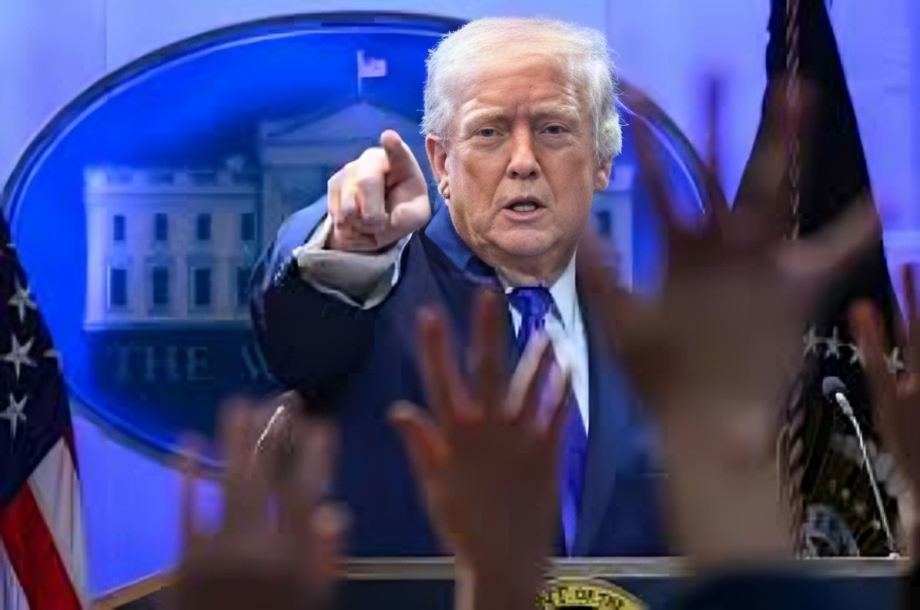

Global financial markets came under pressure on Monday after US President Donald Trump announced fresh tariff threats against eight European countries, reviving fears of a broader transatlantic trade conflict linked to Washington’s controversial push over Greenland.
US stock futures fell sharply in thin holiday trading. According to Reuters, S&P 500 futures decreased approximately 0.7%, while Nasdaq futures fell almost 1%. The U.S. stock and bond markets being closed for a holiday, investor mood became cautious, and the dollar lost ground to conventional safe-haven currencies like the yen and the franc.
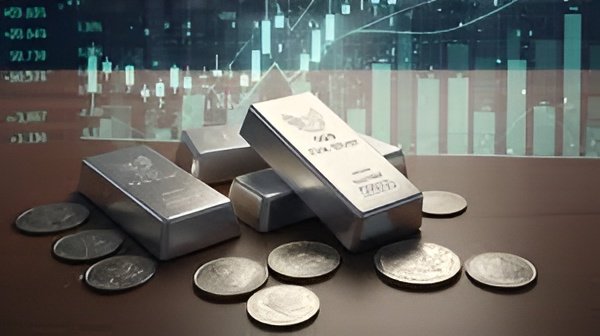
The market’s risk aversion spread to all asset classes. The precious metals had a wonderful time; gold and silver rose to prices never seen before, as people were looking for safety, while oil was going down a bit because of worries that the conflict between the U.S. and Europe would go on long enough to negatively affect global growth and energy demand.
European markets also reflected the uncertainty. Futures linked to the EUROSTOXX 50 and Germany’s DAX were both down around 1.1%. In Asia, Japan’s Nikkei index fell 1%, while MSCI’s broad Asia-Pacific index outside Japan slipped marginally.
Trump stated the US will introduce a further 10% import tariff on products from Denmark, Norway, Sweden, France, Germany, the Netherlands, Finland, and the UK, starting from February 1. In case the dispute continues, he cautioned that the tariffs could escalate to 25% by June 1.
The leading European Union nations condemned the action in very strong terms, denouncing it as economic blackmail related to the matter of Greenland. The EU has several countermeasures at its disposal, including retaliatory tariffs on €93 billion worth of US imports that were approved last year but temporarily suspended. Brussels could also invoke its Anti-Coercion Instrument, potentially targeting US services trade or investments.
Analysts cautioned that financial retaliation could have serious consequences. Deutsche Bank noted that European investors hold nearly $8 trillion in US bonds and equities—almost twice as much as the rest of the world combined. Any move to repatriate capital, they warned, could be far more disruptive than tariffs alone.
“The US and European financial markets’ interdependence is at its peak ever,” stated George Saravelos, Deutsche Bank’s global foreign exchange research head, who also mentioned that the use of capital flows as a tool would endanger market stability significantly.
The conflict is anticipated to overshadow the meetings at the World Economic Forum in Davos this week, where world leaders—including a big US contingent led by Trump—are due to be present.
In Asia, traders were looking forward to important Chinese economic figures, with growth outlooks being revised downwards to 4.4% for the December quarter from 4.8% as a result of the weak domestic consumption offsetting the strong exports. Also, the attention is on the Bank of Japan’s policy meeting later this week when the officials might give a hint of tightening down the road even though they decide to keep the rates the same.
In the foreign exchange markets, the euro managed a small gain to $1.1613, the pound moved up to $1.3387. The dollar depreciated against both the yen and the Swiss franc. Gold surged by 1.5% to $4,664 an ounce, while on the other hand, oil prices went down with Brent crude falling to $63.84 a barrel and US crude to $59.18.
The markets, nevertheless, kept a vigilant eye on potential geopolitical risks, among them the escalation of conflicts in the Middle East, as a group of US Navy aircraft carriers is likely to arrive in the Persian Gulf this week.