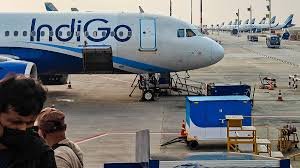
IndiGo, the largest airline in India, is now receiving more and more criticism from pilots’ unions, politicians, and aviation experts after the Directorate General of Civil Aviation (DGCA) slapped a penalty of Rs 22.2 crore on the airline for its extensive flight cancellations and delays in December. Whereas the DGCA justified its action as the biggest fine possible under the law, the critics claim that the fine is not even close to being enough to compensate for the passengers’ distress caused on such a large scale.
The disruptions that occurred mainly in early December resulted in the cancellation of hundreds of flights, which in turn left approximately 600,000 to 700,000 passengers stuck at the airports all over India. The images of passengers sleeping in terminals, among them the Delhi airport, waiting for their morning flights, had caused great public outrage and drew the attention of politicians as well.
Captain C.S. Randhawa, president of the Federation of Indian Pilots, termed the incident a “national air travel crisis” and questioned why senior IndiGo executives were let off with warnings despite what he described as a systemic failure.
“The pilots were available, the cabin crew was available, the aircraft were available — yet the flights didn’t operate. This was a deliberate lapse,” Randhawa said, adding that the penalty was “very small” considering the magnitude of the disruption.
Drawing a comparison, he pointed to the $140 million fine imposed on Southwest Airlines in the US after a similar operational collapse during the 2022 holiday season. “What is Rs 22 crore in comparison? It’s a negligible amount,” he said.
Political leaders also weighed in. Shiv Sena (UBT) MP Priyanka Chaturvedi described the penalty as inadequate, saying the chaos caused “global embarrassment” and inflicted emotional, mental and financial stress on passengers. In a post on X, she criticised the regulator for what she called a “princely sum” that did little to compensate travellers for surge fares and prolonged delays.
However, some aviation experts defended the DGCA, citing legal limitations. Under the Bharatiya Vayuyan Vidheyak, 2024, the regulator can impose a maximum fine of Rs 1 crore per violation for safety and operational lapses. Section 32 of the law governs the adjudication of penalties.
The Rs 22.2 crore fine was calculated by imposing a daily penalty of Rs 30 lakh for 68 days of continuous non-compliance with revised crew rostering norms, along with a one-time systemic penalty of Rs 1.80 crore for violating civil aviation requirements.
Aviation expert Shakti Lumba said the DGCA had done all it could within the framework of existing law. “Given the statutory cap, the regulator has applied the strongest possible action,” he noted.
Yet questions remain over accountability. Aviation analyst Amit Singh flagged inconsistencies in IndiGo’s explanation, noting that the airline initially blamed pilot shortages, but the DGCA’s findings did not mention manpower scarcity or hold any individual accountable for crew planning failures.
“The report penalises scheduling lapses but leaves manpower accountability unaddressed,” Singh said, calling for greater transparency.
Ex-Infosys CFO, T.V. Mohandas Pai, paralleling the thought, suggested the government to reconsider the fine and insisted that the degree of disturbance caused by the incident warranted a far more powerful deterrent to avoid similar crises happening in the future.
The current debate over the issue has again raised the question of the necessity for stricter air transport regulations, larger fines and better-defined manager responsibility, particularly in the context of the increasing number of air travelers in India.