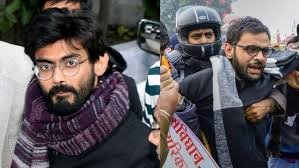
The Supreme Court of India, the highest court in the country, notified the student leaders, Umar Khalid and Sharjeel Imam, on Monday that the police would detain them as they were reportedly involved in the northeast Delhi riots of 2020. Simultaneously, the court was considering the appeal against the bail denial of the five co-accused in the same case by the Delhi High Court. The two ex-students contested the High Court’s ruling, claiming it was prejudicial and had denied their bail plea under the Unlawful Activities (Prevention) Act (UAPA) on the basis that they were engaged in a massive conspiracy behind the riots.
The two-judge bench of Justices Aravind Kumar and NV Anjaria granted bail to five of the accused who had applied for it including Gulfisha Fatima, Meeran Haider, Shifa Ur Rehman, Mohd Saleem Khan, and Shadab Ahmed.
Supreme Court Verdict and Reasoning
The Supreme Court observed that “not every accused stands on the same footing while considering bail.” The court highlighted that the hierarchy of participation requires individual assessment of each application. While five accused were deemed eligible for bail, the court found prima facie evidence of criminal conspiracy against Umar Khalid and Sharjeel Imam under the UAPA, justifying the denial of bail at this stage.
The top court stated:
“Article 21 requires the State to justify prolonged pre-trial custody. The record discloses that the prosecution material discloses a prima facie allegation against the appellants Umar Khalid and Sharjeel Imam. This stage of proceedings does not justify their enlargement on bail.”
Statements by the Accused
- Sharjeel Imam, represented by senior counsel Siddhartha Dave, expressed discontent over being characterized as a “dangerous intellectual terrorist” without any trial, affirming that he was not part of the disturbances when he was arrested on January 28, 2020.
- Umar Khalid, who was taken into custody in September 2020, claimed that he was out of Delhi during the riots and contended that he should not be punished for exercising his right to protest.
Comments from Lawyers and Families
Gulfisha Fatima’s lawyer welcomed the court’s decision for the five released accused:
“They will be coming out of jail after 5.5 years. Khalid and Imam may apply for bail after one year. The police and trial have been directed to proceed swiftly, with all witnesses to be examined within a year.”
Khalid’s father also shared his reaction, emphasizing the long wait and the need for due process.
Delhi Police Position
The Delhi Police contended the riots were planned beforehand and executed with the intention of targeting India’s sovereignty, and they were timed to match the visit of US President Donald Trump to India. They accused the protesters against the Citizenship Amendment Act (CAA) of being a part of a “pan-India conspiracy” to show their dissent in a masked manner.
The police noted:
- 757 FIRs registered in connection with the riots.
- Investigation pending in 273 cases, with 250 trials ongoing.
Background: 2020 Delhi Riots
The northeast Delhi riots erupted on February 24, 2020, during protests against the CAA and NRC, resulting in:
- Over 50 deaths, mostly Muslims.
- 700+ injuries.
Khalid and Imam have been charged under UAPA and IPC provisions as alleged “masterminds” of the violence.
International Attention
A group of US lawmakers, including Representatives Jim McGovern and Jamie Raskin, wrote to the Indian Ambassador, urging a “fair and timely” trial in line with international law, citing concerns over prolonged pre-trial detention.
Supreme Court on UAPA and Bail
The court made it clear once again that UAPA cases, which are extremely sensitive to national security and sovereignty issues, demand a thorough and careful judicial review. The law gives a leeway to the courts for refusal of bail, however, the court insisted that pre-trial detention should not be treated as punishment and should be in accordance with the provisions of Article 21 of the Constitution.
Bail Status:
- Denied: Umar Khalid, Sharjeel Imam
- Granted: Gulfisha Fatima, Meeran Haider, Shifa Ur Rehman, Mohd Saleem Khan, Shadab Ahmed
It also directed that every investigation be concluded swiftly with the examination of witnesses within one year.