
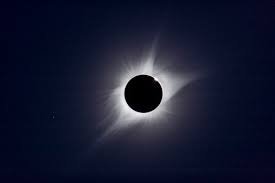
A rare celestial event is already being noticed by the whole world. A total solar eclipse on August 16, 2044, which is going to provide almost six minutes of totality, will be the one that crosses North America and will be the longest and most invincible eclipse of the century.
A Once-in-a-Generation Eclipse
Total solar eclipses will happen in some places on Earth every 18 months, but the solar eclipse in 2044 is notable for its long duration and for its path through well-connected areas. The longest solar eclipse totality will occur in central Alberta and Saskatchewan, with the Sun hidden for up to six minutes, double the time many saw during the 2024 eclipse.
The eclipse’s trajectory will start in the Pacific Ocean, pass through western Canada, and enter some states of the US, such as Montana and North Dakota, where the complete darkness of the moon will last for three to four minutes.
Why Scientists Are Excited
The long duration of totality for the eclipse over land gives a unique moment for the experts to observe and study the solar corona, perturbations in the atmosphere’s temperature, and the Sun’s activity during a peak period of high solar activity. The eclipse of 2044 comes almost right at the end of the Sun’s 11-year cycle, so there is a good chance for the pink prominences and the coronal streamers to be seen very clearly.
Where to Watch
To experience the full blackout, viewers must stand within the narrow path of totality. The best locations include:
- Central Alberta (near Red Deer and between Edmonton and Saskatoon)
- Central Saskatchewan
- Northern U.S. states such as Montana and North Dakota
Astronomers recommend picking two backup locations, booking early, and tracking weather forecasts as the date approaches to avoid cloud cover.
Viewing Tips
- Use certified eclipse glasses during partial phases.
- Avoid spending the entire event behind a camera—capture a few shots, then watch.
- Arrive early to avoid congestion and have a safe exit route.
- Pack layers, water, and a paper map in case of network slowdowns.
More Than a Sky Event
Eclipses have often become personal landmarks for some people—memories associated with the common feeling of wonder and the rare cosmic silence. The 2044 eclipse is anticipated to attract millions of tourists due to its long-lasting and broad view, which will make even the minor Canadian cities to be temporary global hot spots.
The calendars of astronomers, photographers, tourists, and families are alike already full with the date of the eclipse. The six-minute darkness at noon could be the most prominent astronomical event of the 21st century.