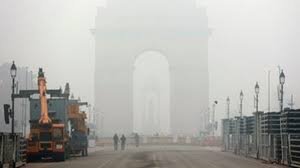
On Sunday the air quality in New Delhi took an abrupt plunge, as the city along with northern India was enveloped with thick fog, smog and extreme cold that nearly drove the Air Quality Index (AQI) to the “severe” level. The health impact of the worsening situation has aroused concern particularly for children, the elderly and people residing in areas with lung ailments.
Air Quality Reaches Near-Severe Levels
Data from the Ministry of Earth Sciences’ Air Quality Early Warning System showed Delhi’s AQI climbed to 410 by 11 pm on Saturday, officially breaching the severe threshold. While there was a slight improvement overnight, the AQI remained high at 396 at 6:30 am on Sunday, still near-severe. Monitoring via the Central Pollution Control Board’s Sameer app indicated extremely poor air quality across several areas in the city during early morning hours.
Worst-Affected Areas
Chandni Chowk (455), Wazirpur (449), Rohini (444), Jahangirpuri (444), Anand Vihar (438), and Mundka (436) were listed as the severely polluted regions and all of them experienced heavy pollution.
Weather Compounds Pollution
The Indian Meteorological Department (IMD) predicted serious fog, which meant that visibility would be extremely low and the situation with pollution would be worse. The regions of Delhi, Uttar Pradesh, Haryana, and Chandigarh were subjected to orange alerts—the second-highest warning level. These alerts served as a warning that the traffic of roads, railways, and air could possibly be affected.
Cold Conditions Add to Discomfort
The highest temperature in Delhi was around 17°C and the lowest was 8°C, thus the already hard to endure conditions with the thick fog got worse moreover. The dense fog caused the skyline to disappear and people were forced to stay inside all day long.The specialists linked the rise in pollution levels to the combination of still air and inversion of temperature, which holds the dirt close to the surface.
Ongoing Concerns
As winter is getting deeper, the capital city of India, Delhi, still suffers from bad air quality which comes and goes frequently. This situation has made it very clear that there is an urgent need for both the implementation of short-term measures to reduce air pollution and finding long-term solutions that will not only protect public health but also enhance the quality of air in the area.