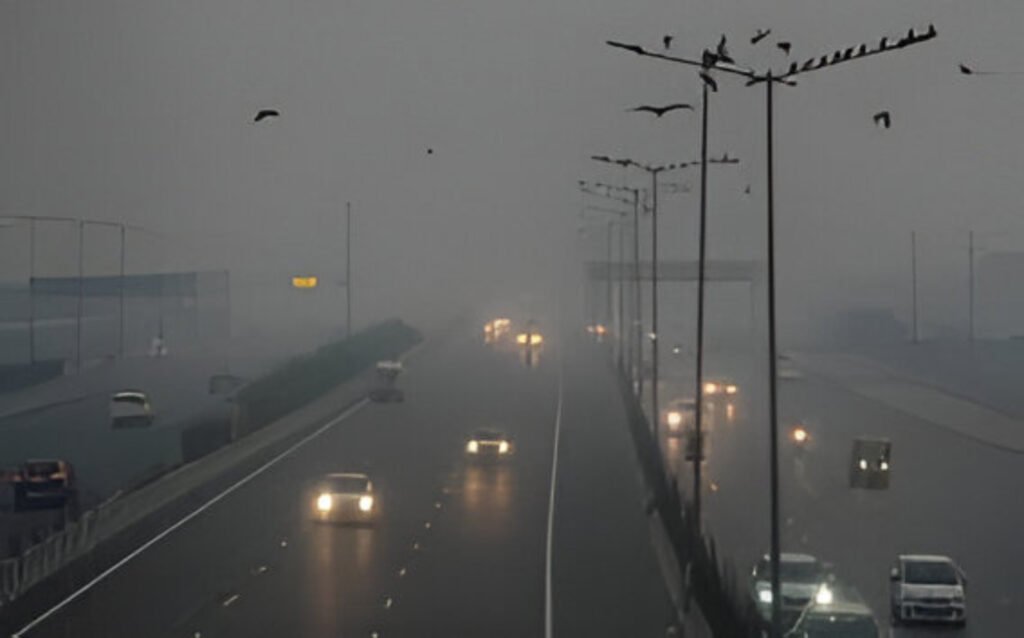
Delhi experienced almost no visibility on Monday, which was the result of a very thick layer of fog mixed with extremely polluted air, causing virtually nothing to be seen across the whole city and the larger NCR area, including roads, cars, and even buildings near the city.
The very thick smoke that started to come in from Sunday evening covered not only Delhi but also other places like Noida, Ghaziabad, and Gurugram. The India Meteorological Department (IMD) red flagged the situation for Monday and then downgraded it to yellow for Tuesday, signalling the presence of fog that was very thick to exceptionally thick as a result of the ongoing western disturbance from December 27.
Air quality worsened sharply alongside the fog. The Air Quality Index (AQI) stayed at the ‘severe’ level, with more than 400 in Delhi and Noida, 398 in Ghaziabad and 392 in Gurugram, the latter two cities being close to the same level as well. The amalgamation of pollutants caused a great number of residents to refer to the air as not merely hazy but even hard to bear in terms of respiration.
Commuters shared alarming visuals and experiences on social media, showing vehicles barely visible a few metres ahead. One user called it the “foggiest day of the season,” warning of major disruptions to flights and trains. One more person stated that the visibility was so bad that a metro station which was only 50 meters away was not visible, saying that the air “smelled the acrid and salty” which was a sign of heavy pollution being mixed with moisture.
The extreme conditions severely disrupted air and rail travel. As indicated by the data from FlightRadar24, almost 130 flights were scrapped, and more than 200 flights to and from Delhi’s Indira Gandhi International Airport experienced delays on Monday morning. The authorities warned that the ensuing holdups were going to be caused by the northern India situations which witnessed fog in the airports and their slow recovery.
An IMD spokesperson informed that Palam airport’s condition was so bad that visibility dropped to just 50 meters during the night from 2:30 a.m. to 8 a.m. and even then it was only very gradually getting better. Besides, he mentioned that only around 8:30 a.m. the visibility at Safdarjung was up to 5 meters at most.
The meteorological department’s predictions of heavy fogs, together with the extremely high pollution levels, led the authorities to issue a warning for the public to be very careful, to limit their travels to cases of utmost necessity, and to keep themselves informed of the weather and transport conditions through the advisories.