
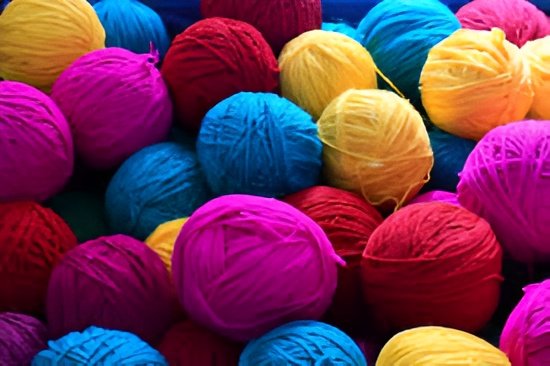
Though wool is a natural fiber that is worth considering in India for winter wear, carpets, and interior decorations, besides several industrial products, it becomes a strong commodity. In the wool processing industry there, India takes pride as the holder of the second-highest number of sheep with 77.4 million heads following the livestock-based economies of China and Australia. This industry taps the organized as well as the unorganized front and thus caters to the persons who are engaged in the livelihood generating millions in number throughout the stretch of this country and region.
In 2024, the state of Rajasthan, the biggest wool producer in India, retained its prized position, which accounted for nearly half of India’s total wool production. According to statistical data, 16,013.50 thousand kg of wool was produced by the state making up 47.53 percent of the country’s total output.
Jammu & Kashmir emerged as the second dominant producer with 7770 thousand kg, trailed by Karnataka at 6472 thousand kg and Telangana at 4422 thousand kg. Gujarat, Maharashtra, and Himachal Pradesh proved to be other significant contributors.
The maximum rate of annual growth in wool production was achieved by Punjab, recorded at 22.04%. All of this indicates a significant YoY increase. Tamil Nadu, in which category it has registered a growth rate of 17.19%, another 3.20% was recorded by Gujarat.
The nation produces wool that is grouped and falls into three main categories: carpet-grade wool for carpets, apparel-grade wool for cloth, and wool in coarser quality for the production of much larger items, rugs, and multitudes of other things. Carpet-grade wool produces about 85% of the total output of wool, while apparel-grade wool and the nature of coarser grades together make up just about 5% each.
An organized wool ecosystem for India has established several composite mills, spinning factories, carding units, rug production units, and garment factories. We have, in this field, a large-scale informal sector comprising small looms, power looms, hosiery units, knitting centers, dyeing corporations, and so on.
With 16,013.50 thousand kg, wool production from sheep led the Indian state of Rajasthan in FY24.
-The sector provides maximum rural employment to the country. The organized wool sector employs 1.2 million people supported by another 2 million in the related industry. Carpet-weaving factories alone give employment to 0.3 million take-home workers. In FY24, total wool production in India stood at 33.69 million kg.
In Wool Production of different species, ewes contributed 71.13 percent wool, rams and wethers were responsible for 14.54 percent, and lambs for 14.33 percent.
Top 10 Wool Producing States in India for FY24 are noted as:
Rajasthan-16013.50 thousand kg
Jammu and Kashmir- 7.77 thousand kg
Karnataka- 6.45 thousand kg
Telangana – 4,332 thousand kg
Gujarat- 2,046 thousand kg
Maharashtra- 1,520 thousand kg
Himachal Pradesh- 1,421.76 thousand kg
Uttar Pradesh- 937 thousand kg
Andhra Pradesh- 778.23 thousand kg
Haryana- 674.61 thousand kg
State-Related Notes
Participation in State-wise Total Wool Production:
Rajasthan-
Rajasthan is the largest wool producer in the country due to its dry climate and extensive grasslands. The region has genuine sheep breeds, Marwari and Chokla, to produce the coarse variety of wool, utilized mainly in carpet and blanket knitting.
Jammu and Kashmir-
This region of high elevation and cold climate with breeds like Changthangi and Merino produces high-quality fine wool, which is extensively used in shawls, clothes, and handicrafts.
Karnataka:
Karnataka comes all the way up to the third despite having a small-small sheep-rearing system. Medium-to-course wool is largely produced by this country. Carpeting, durries, and textiles thus form the bulk of the industry.
Telangana:
Major wool producers go ahead at the hands of Telangana, largely because of government initiatives geared towards helping landless shepherd communities.
Gujarat:
Wool production takes place in the desert and peninsular region of Gujarat. Because of the fact that most of the wool is targeted to the carpeting industry in the state.
Maharashtra:
Most of the productions are carried out in drought areas and other areas wherein sheep rearing prevails as tradition. This wool is initialized to produce low-cost blankets and other woollen materials.
Himachal Pradesh:
The land lies at consistently higher elevations in cold mountainous regions from which they reap WOOL profit. The terrain is best suitable for sheep and wool from goats to be inducted for producing wool for warm wear and for craft goods.
Uttar Pradesh, Andhra Pradesh, and Haryana:
Given that they are mainly dependent on traditional pastoral and mixed farming systems, these states contribute little to commodities such as wool whereby the wool is used as a basic raw material for cloth, rug, and carpet.

Women’s Reservation Bill Fails in Lok Sabha; Rahul Gandhi Slams Centre, Credits Opposition Unity
The Lok Sabha rejected the women’s reservation bill on Friday which led to intense political reactions because Leader of the Opposition Rahul Gandhi accused the government of trying to damage the Constitution through its efforts to