After the Indian Railways, which has a story spanning over a century, still holds the same place of importance as the main Not only does the Indian Railways, with its saga of over a hundred years, still maintain its prime position as the most important transportation mode in India, but it also occupies the same niche. It boasts 114,500 km of tracks and 1.2 million staff making it the world’s fourth-largest rail network and its presence is felt hugely by the Indian populace on a daily basis. There are around 7,500 railway stations in India, but not all of them are equal concerning their size and passenger traffic and the facilities provided. The following is a summary of the five largest railway stations in India:
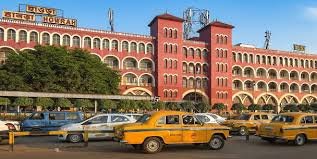
Howrah Junction Railway Station – Kolkata, West Bengal
Howrah Junction, which was inaugurated in 1853, is the largest and the oldest railway station in India. It caters to the extensive eastern part of the nation, thus, the station handles 600 trains each day. Howrah has a total of 23 platforms and 25 tracks where the old-world charm of the architecture is nicely complemented by new-age facilities like free Wi-Fi, executive lounges, modern ticket counters, and different drinking water options.
Sealdah Railway Station – Kolkata, West Bengal
Kolkata is home to Sealdah Station, which holds the position of the second-largest station in India. It opened its doors in 1862 and consists of 21 platforms along with 28 tracks, thus allowing an enormous passenger traffic of approximately 1.5 million daily. The number of people using the station reflects the demand for modern facilities such as executive lounges, food courts, very efficient ticket counters, waiting rooms, and free Wi-Fi, which are all a part of passenger comfort.
Chhatrapati Shivaji Terminus – Mumbai, Maharashtra
Chhatrapati Shivaji Terminus, a UNESCO World Heritage Site and constructed in the year 1853, is the foremost and most important railway station in Mumbai. The station accommodates 18 platforms and 40 tracks in total, which support the daily movement of around 1,000,000 people. Moreover, it is the hub of the Central Railway Zone, which not only makes the station the most crowded but also the most economically vital in India.
New Delhi Railway Station – New Delhi
New Delhi Railway Station, an establishment of 1956, is the connection point of the capital with all the parts of India. The station consists of 16 platforms, 18 tracks, and a daily train traffic of almost 400 units. The station area is shared by the common commuters as well as by the political and business leaders, thus making it one of the busyness stations in India and one of the major income earners absolutely.
Chennai Central Railway Station – Chennai, Tamil Nadu
Chennai Central, the major train station in South India, was built in 1873. The station has 17 platforms and 17 tracks for working with daily more than 400 trains and over 400,000 passengers. Among the facilities that together make this station one of the most advanced in the region, there are a large waiting area for 1,000 persons, food courts, free Wi-Fi, and a modern ticketing system.