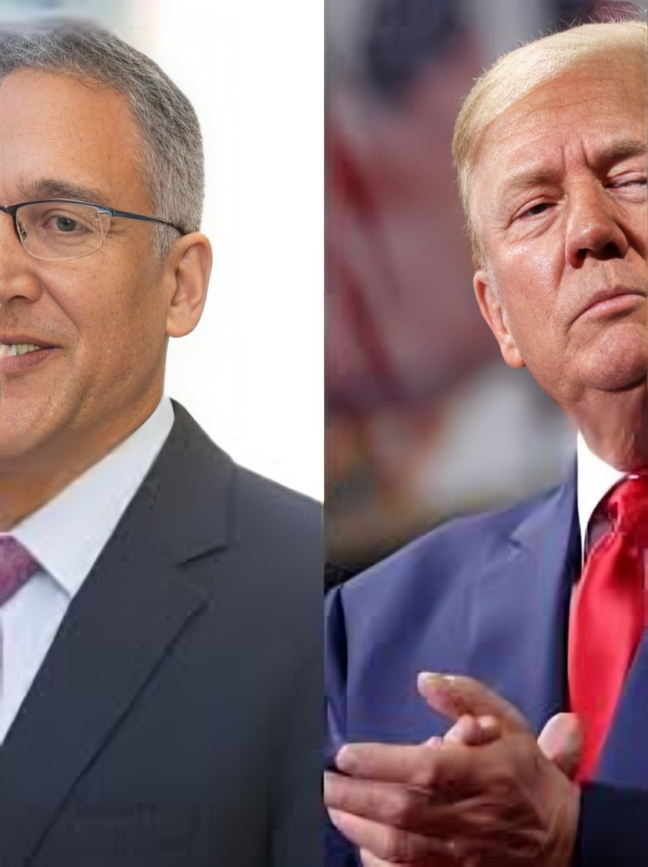
The administration of Donald Trump has announced a fresh 10% tariff on imports into the United States, with the revised rate set to take effect from February 24 for a period of 150 days. The move comes after a major legal setback from the U.S. Supreme Court, which struck down several earlier tariff measures.
According to a White House factsheet, all major trading partners—including India—will face a uniform 10% duty during this period, even if previous agreements had set higher negotiated tariff levels.
New Tariff Order to Take Effect Immediately
After signing the order, President Trump said the new measure would be “effective almost immediately.” The administration has spent the past year imposing varying tariff rates as part of its “America First” trade strategy.
However, sectors currently under separate investigations—such as pharmaceuticals—and goods traded under the United States–Mexico–Canada Agreement will remain exempt.
A senior White House official indicated that the administration may later explore ways to restore “more appropriate or pre-negotiated tariff rates” once legal and policy reviews are completed.
India-US Trade Deal Unaffected, Says Trump
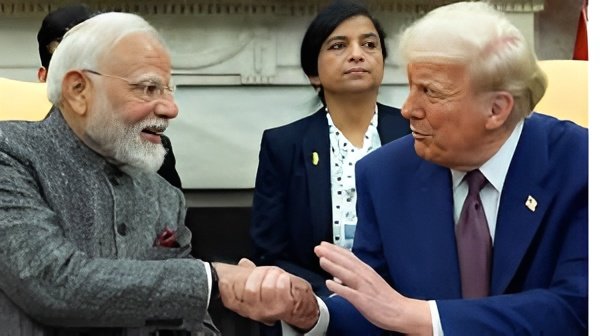
President Trump stated that the court’s ruling would not impact the broader India-US trade understanding.
“They’ll be paying tariffs, and we will not be paying tariffs,” he said, adding that the agreement with India remains in place but will now operate under a revised framework.
Political Reactions in India
Shiv Sena (UBT) MP Priyanka Chaturvedi questioned the government’s decision to move quickly on an interim trade arrangement.
In a post on X, she asked why India did not wait for the Supreme Court’s verdict, noting that the new global tariff rate now stands at 10%. She also raised concerns over concessions related to energy purchases and agricultural interests, and compared India’s approach with Brazil’s stance on trade sovereignty.
Chaturvedi further argued that while countries like China retained flexibility in purchasing discounted Russian oil, India may have reduced its negotiating leverage.
Businesses Face Fresh Uncertainty
The court ruling initially raised hopes of tariff relief, but the administration’s immediate move to reimpose duties has created continued uncertainty for businesses.
Economists warn that any short-term economic gains from lower tariffs could be offset by policy unpredictability. Michael Pearce of Oxford Economics said the overall tariff burden may eventually settle close to current levels as the administration seeks alternative legal pathways.
Many US companies have already raised prices or adjusted supply chains to manage higher import costs, and industry groups expect prolonged legal battles over trade policy.
Questions Over Refunds for Past Tariffs
The Supreme Court decision did not address whether companies or consumers would receive refunds for previously collected tariffs. The administration has indicated that years of litigation may follow.
The University of Pennsylvania’s Penn Wharton Budget Model estimates that potential refunds could reach up to $175 billion, though experts note that large corporations are more likely to benefit than small businesses or individual consumers.
Some US political leaders have demanded immediate refunds, while others caution that there is currently no clear legal mechanism for consumers to recover the money.