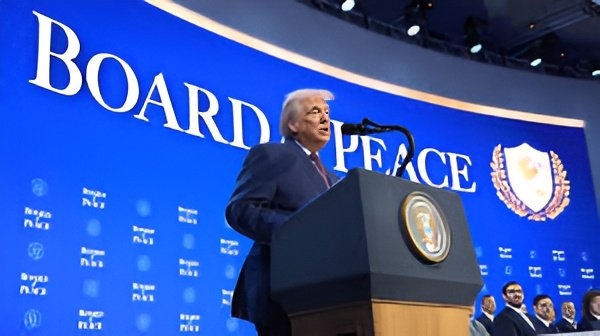
On Friday President Donald Trump delivered a speech at Fort Bragg which resembled a campaign event while he encouraged military personnel to back Republican candidates for the forthcoming midterm elections. This action received public notice because military traditions have established rules which keep political activities separate from military operations.
The rally established a traditional structure. Trump entered the event through Lee Greenwood’s “God Bless the USA” while he endorsed Republican candidates and he attacked his former president and he concluded his speech with the Village People’s “Y. M. C. A.” The event took place at an Army base which operated at full capacity while most attendees wore military uniforms.
During the event, Trump shared the stage with Michael Whatley, a former Republican National Committee chairman now running for the Senate. Trump used the platform to endorse Whatley, criticise Democrats and reiterate previously announced plans to boost military spending.
Trump told the troops that they needed to vote for his team because his administration restored the Fort Bragg name after Congress mandated the Pentagon to remove all Confederate names from military bases. The administration sidestepped the law by naming the installation after Pfc. Roland L. Bragg rather than Confederate Gen. Braxton Bragg.
Most service members present refrained from cheering or applauding during overtly political remarks, instead raising phones to take photos or videos. Republican officials and Trump staff members who attended the event provided most of the applause which included North Carolina Senator Ted Budd and various GOP House members. The handful of troops who responded with enthusiasm to Trump’s announcement about $1,776 bonus checks he authorized in December.
Military Policy and Legal Framework
The Defense Department prohibits active-duty military members from participating in political activities which support specific political parties. The Army field manual states that the organization should operate as a nonpartisan entity because this approach protects public trust while soldiers must keep their military oath to the Constitution.
The Hatch Act restricts most government employees from conducting political activities while working in their official roles. The law does not restrict presidential candidates.
The presidents from both parties have spoken to military members at military bases but they usually refrain from using their speeches to directly promote their political campaigns. Trump has previously faced criticism for political speeches in military settings, including remarks to generals and admirals last year and a visit commemorating the Army’s 250th anniversary that featured partisan merchandise.
Broader Political Tensions
In his speech, Trump criticised Democrats, including former President Joe Biden, and touched on broader campaign themes such as immigration, the economy and plans to increase defence spending to $1 trillion next year. His plan included expanding the naval fleet and enhancing accommodations for military personnel at their stations.
Trump conducted a private meeting with military personnel who took part in the mission to capture Venezuelan President Nicolás Maduro after his rally. He informed the media that one participant would receive the Medal of Honor.
The current event occurs during a time when political arguments about military operations inside the country and abroad have intensified. The Ronald Reagan Institute reports that public trust in the military has become increasingly divided between political parties because Republicans show greater trust to the military while Democrats show decreasing trust.
Democratic lawmakers have criticised Trump’s previous use of military settings for political messaging and his deployment of the National Guard for domestic objectives. Six Democratic veterans in Congress recently released a video reminding service members that their oath is to the Constitution and that unlawful orders should not be followed. Trump called the video seditious.
A federal judge this week temporarily blocked Defence Secretary Pete Hegseth from initiating disciplinary proceedings against Sen. Mark Kelly, a Navy veteran, after a grand jury declined to indict the lawmakers involved.
Kelly described the upcoming election as a major warning signal for democratic rights in his country. He explained that the current situation is dangerous because it risks destroying vital aspects of the American democratic system.
The ongoing argument about how politics and the military interact during an election period receives support from the rally at Fort Bragg.