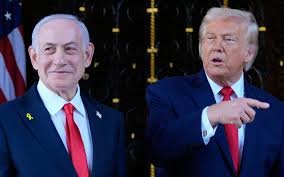
The Israeli Prime Minister Benjamin Netanyahu has taken up the offer of the President of the United States Donald Trump to be part of the proposed “Board of Peace” for Gaza, not taking into account the arrest warrant issued against him by the International Criminal Court (ICC) for war crimes in the area.
Netanyahu’s office made the confirmation of his participation public on Wednesday, which has resulted in raising the already existing doubts about the credibility and impartiality of the new body that Trump is expected to lead and have a great influence over. The ICC warrant is associated with the military action in Gaza, thus making the inclusion of Netanyahu highly debatable.
The “Board of Peace” was announced as part of the second phase of the ceasefire framework with Hamas. U.S. officials have stated that the body will be responsible for overseeing the governance capacity-building, regional relations, reconstruction, investment mobilization, and large-scale financing for Gaza.
Critics, however, maintain that Netanyahu’s participation is a factor that erodes the neutrality of the board, especially since it is meant to be a consultant for Gaza’s post-war future. In the past, the Israeli government had already declared its opposition to the executive committee’s lineup by highlighting the participation of Turkey, a regional rival, and asserting that the arrangement had not been sanctioned by the Israeli government.
Not only is Netanyahu the only one invited despite being legally scrutinized internationally. Russian President Vladimir Putin, who is at the ICC in connection with the war in Ukraine, is also said to be among the invitees. The Kremlin has said it is seeking clarification from Washington. Another invitee is the Belarusian President Alexander Lukashenko, who is a hardliner in his support of Putin.
The far-right Israeli Finance Minister Bezalel Smotrich has condemned the tripartite initiative and has rather suggested that Israel should take unilateral responsibility for the future of Gaza instead of depending on international regulations.
Trump, according to reports, is to sign the charter of the Board of Peace during the World Economic Forum in Davos where he will be speaking. He has indicated that the board’s mandate could expand beyond Gaza to address global conflicts, fuelling speculation that it could rival or partially replace the United Nations—an institution Trump has frequently criticised.
While Trump said the UN should continue to exist, he suggested the new board “might” take on a larger role, arguing that the UN has failed to realise its potential. China swiftly responded, reiterating its firm support for a UN-centred international order based on international law.
The board’s reported structure includes permanent members such as the UAE, Morocco, Vietnam, Belarus, Hungary, Kazakhstan and Argentina. Other countries, including the United Kingdom and the European Union’s executive arm, have confirmed receiving invitations but have yet to respond. Azerbaijan has accepted, while Sweden has declined participation based on the draft charter.
The executive team that will be in charge is U.S. Secretary of State Marco Rubio, Trump’s representative Steve Witkoff, Jared Kushner, the ex-PM of the UK Tony Blair, the head of Apollo Global Management Marc Rowan, the president of the World Bank Ajay Banga and the U.S. Deputy National Security Adviser Robert Gabriel.
There are reports saying that for being a board member, a country may have to invest as much as $1 billion, thus reinforcing the argument about the board’s legitimacy, its powers and the global role it plays.