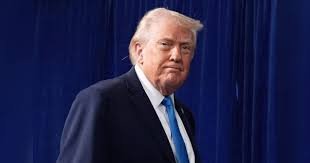
President Donald Trump on Friday urged global oil executives to rapidly invest in Venezuela, pitching the country as a major new economic opportunity following the US-led operation that removed leftist leader Nicolás Maduro from power.
Speaking at a closed-door meeting with top oil company CEOs at the White House, Trump said his administration is seeking at least $100 billion in private investment to revive Venezuela’s oil sector and unlock its vast petroleum reserves. He assured executives that the US government—not Venezuela—would oversee oil dealings going forward.
“You have total safety,” Trump told the executives. “You’re dealing with us directly, not Venezuela. We don’t want you dealing with Venezuela at all.”
US Claims Control Over Venezuelan Oil Sales
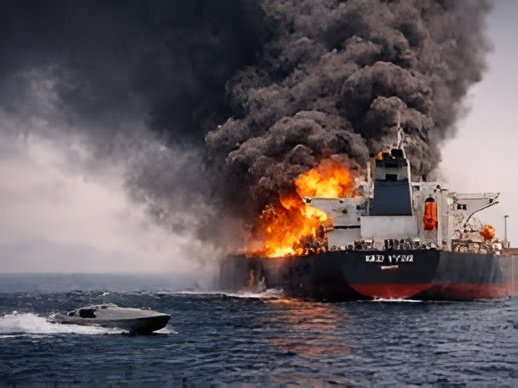
Since the US military operation that captured Maduro last weekend, the Trump administration has moved swiftly to assert control over Venezuela’s oil exports. The White House says it has seized multiple tankers linked to Venezuelan crude and is now overseeing the global sale of 30 million to 50 million barrels of previously sanctioned oil—control Trump said would continue indefinitely.
The president framed the move not just as a geopolitical action but as an economic strategy aimed at boosting global oil supply and keeping US gasoline prices low.
Big Oil Invited Back—With US Protection
Trump stressed that the investment would come from private companies, not taxpayers, but added that government protection would be guaranteed.
“Our giant oil companies will spend at least $100 billion of their own money,” he said. “They don’t need government money—but they do need government protection.”
He said security would come through coordination with Venezuela’s leadership and local population, rather than deploying large numbers of US troops. Companies, he added, could also bring their own security.
Industry Remains Cautious
The White House hosted the leaders of 17 big companies, such as Chevron, ExxonMobil, and ConocoPhillips, who were all once involved in Venezuela before the expropriation of assets by president Hugo Chávez.
ExxonMobil CEO Darren Woods struck a cautious note, saying Venezuela remains “un-investable” under current conditions.
“There need to be significant changes to commercial frameworks, legal systems, and hydrocarbon laws,” Woods said, stressing the need for durable investment protections.
Other invitees included Shell, Halliburton, Valero, Marathon, Eni, Repsol, and trading giant Trafigura.
Strategic and Political Stakes
Venezuela’s oil output has collapsed to below one million barrels per day, and Trump acknowledged the risks involved in reversing the decline. Still, he expressed confidence that oil majors—accustomed to operating in volatile regions—would step in.
“These are not babies,” Trump said. “Some places they drill make Venezuela look like a picnic.”
He also argued that US intervention was necessary to prevent rival powers from gaining influence. “If we didn’t do this,” Trump said, “China or Russia would have.”
Criticism and Diplomacy
Critics strongly condemned the administration’s actions. Tyson Slocum from the consumer protection organization Public Citizen characterized the action as “a brutal form of imperialism,” and charged that Trump was transferring the control of Venezuela’s oil resources to the rich.
At the same time, both Washington and Caracas mentioned they are considering the reestablishment of diplomatic communication. A tiny US contingent went to Caracas on Friday for the purpose of evaluating the US Embassy’s reopening.
In addition, Trump made it known that he was going to have meetings with the Venezuelan opposition leader Maria Corina Machado and the Colombian President Gustavo Petro, which can be seen as a regional reset after the removal of Maduro.
Although the situation is still very strained, the White House continues to claim that the Venezuelan interim leadership is working together quietly behind the scenes—preparing the ground for what could be one of the most significant shifts in global energy dominance in several decades.