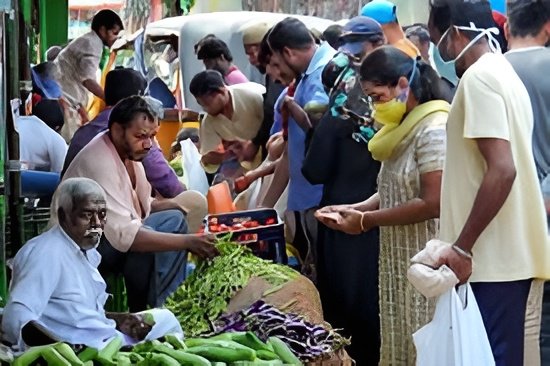
The Wednesday market, which is an iconic feature of Ibrahimpatnam, has been able to ride along with the fast urbanization, increased land prices, and the construction of high-rise buildings in this historic suburb located approximately 40 km southeast of Hyderabad in the Ranga Reddy district, and still have the same old atmosphere.
Ibrahimpatnam’s weekly market, besides being a witness to the changing skyline and commercial growth, still shines as a major symbol of the city’s ever-going cultural identity. Every Wednesday, the hawkers occupy the roads that lead to the village, and at the same time, the vendors sell a variety of items comprising vegetables, food items, clothes, blankets, plastic goods, kitchenware, imitation jewelry, and farm produce. A large number of small traders and local inhabitants still consider the shanty as their main market place.
Vendor Mohd Anwar from Puranapul has been a part of this market for around 40 years now. Recalling the transformation, he said that in earlier times the road saw only bicycles and men in dhotis navigating muddy paths. Today, cars and two-wheelers dominate the stretch. “The surroundings have changed rapidly, especially over the last decade, but the Wednesday bazaar of Ibrahimpatnam has survived,” he said.
Mallesh P, the dealer of second-hand garments, commutes from LB Nagar every week to take part in the market. He disclosed that his dad had been an almost permanent stallholder at the shanty for a long time until he died in 1999. “I am continuing the same business he once ran here,” Mallesh said, highlighting how the market sustains generational livelihoods.
Earlier known for its livestock trade — especially sheep, cattle and poultry — the shanty has gradually evolved. As per Monaiah, a local resident, the sales of livestock have gradually decreased leading to the rise of vegetables, clothing, imitation jewellery and handicrafts that fulfill the daily needs of the households.
Meanwhile, property prices in Ibrahimpatnam mandal and surrounding areas have risen sharply. Land in nearby villages now costs between Rs. 2 crore and Rs.The price of residential plots of about 150 square yards near the Nagarjuna Sagar highway is lying between Rs. 40 lakhs and Rs. 50 lakhs, while the price of an acre of land has reached 5 crores.
This very region can be traced back to the times of Ibrahim Qutb Shah, the ruler after whom it got its name. He built a lake called Ibrahim Cheruvu, which eventually attracted settlers and led to the formation of the town.
In the midst of rapid urbanization and ever-increasing real estate prices, the shanty of Ibrahimpatnam which is present on Wednesdays has managed to survive — a living testimony to the suburb’s history, toughness, and the spirit of the community.