The Telangana government has announced a new welfare initiative aimed at supporting families living in extreme poverty. The state is preparing to launch a comprehensive survey to identify the poorest households, and the scheme will provide government assistance based on the survey results. The entire beneficiary selection process will be supervised by district collectors.
New Scheme Inspired by Kerala Model
Telangana’s Rural Development Minister Seethakka has decided to implement a public participation system, similar to the one used in Kerala, to identify the poorest families in the state. The State Poverty Eradication Organization (SERP) has been entrusted with the task of conducting the survey and preparing a need-based plan for the identified families.
SERP has already carried out a pilot survey in eight mandals across five districts under the Telangana Integrated Livelihoods Program (TGILP), identifying nearly 8,000 extremely poor families. Based on the success of this pilot, model survey proposals have been prepared for the entire state and approved by Minister Seethakka. These proposals are now awaiting approval from Chief Minister Revanth Reddy, after which the full survey will begin.
Survey to Be Conducted with Villagers’ Participation
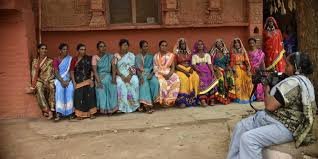
The survey will be conducted at the village level, with active participation from villagers. Women’s group members will visit every street and evaluate the condition of each household. A detailed village map will be created at the panchayat office, showing pucca houses, kachcha houses, and huts with visual representations.
Each household’s family details will be recorded on cards and placed on the map. The entire process will be conducted openly in the presence of villagers. Local opinions will be collected regarding living conditions and who should be included in the list of poorest families. A preliminary list will be prepared with community consent.
The families included in the preliminary list will be visited directly, and their details will be discussed in a women’s group meeting. After careful discussion, a final list will be prepared. Depending on village size and population, the survey process may take three to five days.
How Beneficiaries Will Be Selected
Once the village-level list is prepared, it will be forwarded to the Mandal Samakhya. Four representatives from the Mandal Samakhya will revisit the village and verify the list based on income, food security, and living conditions. They will speak to villagers and confirm details. If a family has migrated, information will be confirmed through neighbors.
If objections are raised during verification, the list will be revised accordingly. The final list is then submitted to the MPDOs, who conduct another field verification through the village secretary and send it to the District Rural Development Organization (DRDO). From there, the list reaches the District Collector, who reviews and officially announces the eligible beneficiaries.
Who Will Be Eligible?
The government has set several criteria to identify the poorest families. Priority will be given to:
- SC/ST families, especially tribals
- Families without their own house or land
- Those living in a single-room mud house
- Daily wage laborers or families with fixed income
- Families without cultivable land or with fallow land
- Women living alone, elderly without support
- Sanitation workers, garbage collectors, transgender people
- Patients suffering from chronic diseases such as TB and cancer
- Families with disabled members unable to work
- Migrant workers and families facing similar hardships
- BC and OC families in comparable conditions
Who Will Not Be Eligible?
The following are not eligible for assistance under this scheme:
- Families with a government employee
- Income tax payers
- Monthly income above Rs. 10,000
- Ownership of vehicles like car, jeep, tractor
- Ownership of more than 2.5 acres of land
- Possession of borewell or motor pump sets
- Loans exceeding Rs. 50,000 from banks or institutions