
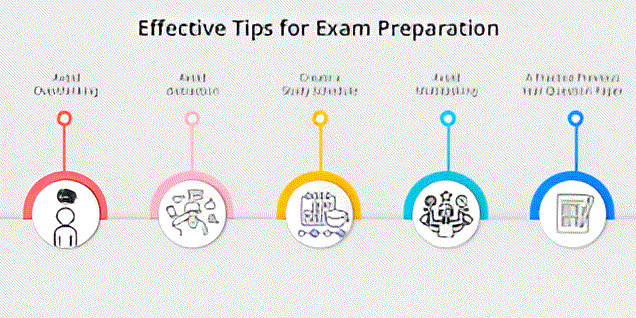
Preparing for exams is really hard, but the right techniques will not only lead you to study in an effective way but also with confidence. It doesn’t matter if you have to fight school tests, university final exams, or competitive ones, these 10 points will help you to derive the very best from your preparation and do the best you can.
1. Start Early
Never ever pinch your learning till the last minute. Begin your revising way ahead of the planned time and this way you will have the time to study all the subjects. Make a study schedule either daily or weekly that suits your timetable and then keep your compliance to it continuously.
2. Create a Study Plan
Having a well-structured study plan brings about an orderly routine in your study habits and lowers your stress levels to some extent. First, mark the dates of your exams, then arrange the subjects according to their difficulty level, and finally, allocate a fixed time for each topic. Do not forget to include periods for revision and unexpected delays.
3. Choose the Right Study Environment
Look for a location that is really calm, cozy, bright enough, and has very few disturbances. Total quiet is acceptable for some learners while others require soft music played at a low volume in the background.Make your study place a place that promotes concentration and efficiency.
4. Use Active Learning Techniques
Participate in the necessary amount of reading and writing.
- Flashcards for major concepts
- Mind maps to represent ideas graphically
- Others’ teaching as a means to consolidate understanding
- The use of these methods leads to better retention and deeper comprehension.
5. Practice with Past Papers
One of the most effective ways to become familiar with the exam style, time management and the most common questions is to solve old exam papers. Try to do it in an environment as close to the exam as possible because it will not only help you to gain confidence but also to identify your weak points.
6. Manage Your Time Effectively
Another technique permitting management to be good at time depends upon balancing study with rest. For example, one of the easy ways involves.
- You will have to create a timetable with great detail.
- You will have to give top priority to the most important issues.
- You will have to limit your phone and social media distractions to a minimum.
- You will have to take breaks regularly and at specific times to keep yourself fresh.
7. Manage Stress
Exams can be stressful. Reduce anxiety by:
- Exercising on a regular basis serves to lift the mood as well as increase energy.
- Applying relaxation practices such as meditating, doing yoga, or performing deep breathing exercises.
- Conversing with friends, family members, or mentors as a means of getting support.
- Providing enough sleep as a measure to keep concentration and sharpness of mind.
8. Know Your Learning Style
Tailor your study methods to your learning style:
- Visual learners: Implement graphics, maps, and films as their main source of information
- Auditory learners: Find the easiest way to learn through listening or speaking the topic out loud
- Kinesthetic learners: Take part in practical exercises or play characters
9. Teach Others
Teaching others some subjects will surely help your knowledge, it will show you the weak spots of your understanding and give you a better understanding of the whole subject at the same time, and it will also develop your communication skills. Visual aids, analogies, and examples come to the rescue and are very useful in making difficult concepts easier.
10. Eat Healthy
Nutrition has a direct effect on concentration and memory. The most important source of nutrients should come from a daily intake that is well-balanced and made up of fruits, vegetables, lean proteins, whole grains, and healthy fats. Moreover, drinking enough water and avoiding sugary or highly processed foods will assist in maintaining your energy level that is required for long study hours.
Final Advice
It is important to be very persistent, to make a good plan, and to know oneself when preparing for exams. Determine various options and choose the one that is the best suited to you. If you apply yourself with discipline, focus, and a good mindset, you will confront the tests with self-assurance and receive the grades you aim for.






Women’s Reservation Bill Fails in Lok Sabha; Rahul Gandhi Slams Centre, Credits Opposition Unity