
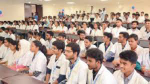
Telangana’s rapid expansion of medical education has opened doors for thousands of aspiring doctors, with nearly 9,000 MBBS seats now available across 61 medical colleges in the State. However, behind this growth lies a less visible challenge — many capable students from rural and Telugu-medium backgrounds are struggling with English, the primary language of medical instruction.
In order to find a solution to this problem, the State Health Department has opted to add training in structured spoken English and communication skills for the first and second years of MBBS students at both government and private medical schools. The intent of the program is to assist students who are accepted into medical schools but have difficulty with English medical terminology and classroom teaching.
The officials stated that the endeavor is aimed at alleviating academic stress, reducing the number of students who drop out, facilitating the understanding of medical concepts, boosting research participation and preventing financial exploitation due to delays in completing grades. The training will primarily help students coming from Telugu-medium schooling, who frequently experience a sudden and overpowering shift to English-based education.
This program, based on a similar initiative already in place in government nursing colleges, is planned to commence from the 2026 academic year. The decision was made after thorough discussions in a recent departmental review of challenges in medical education.
Health Minister C Damodar Rajanarasimha said changes such as SC sub-categorisation and the establishment of medical colleges in district headquarters had significantly altered the classroom profile. “With 35 government and 26 private medical colleges now offering around 9,000 MBBS seats, a large number of students from rural and economically weaker sections are entering medical education. For many of them, the language barrier has become a serious obstacle,” he said.
“Several bright students experience intense stress because they are unable to fully understand medical concepts taught in English. This often leads to isolation, loss of confidence and, in some cases, dropping out,” the Minister added.
The initiative has received a positive response from doctors who have gone through the same difficulties. Dr. M. Rajeev, a lung specialist at Osmania Medical College, shared his story of going from studying in Telugu to English during his MBBS course.“The sudden shift was extremely difficult and mentally stressful. Many rural students from government schools face the same situation today,” he said.
He added, “This move will ensure that students will not be held back by the language barrier and will thus not lose their dreams of being doctors.”
According to the officials, the measure is an integral part of the program to make medical education more accessible, to provide better learning outcomes, and to improve students’ morale as the diversification of medical education in Telangana continues.


Women’s Reservation Bill Fails in Lok Sabha; Rahul Gandhi Slams Centre, Credits Opposition Unity