
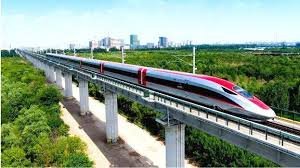
The Centre has approved a high-speed rail corridor which will deliver extensive rail infrastructure improvements throughout Kerala. The initial planning work will be conducted by E Sreedharan who is known as the ‘Metro Man’ while the Delhi Metro Rail Corporation (DMRC) prepares the detailed project report (DPR). The DPR will take nine months to complete.
Sreedharan met with Union Railway Minister Ashwini Vaishnaw in New Delhi on January 16 to make this decision. Sreedharan and Chief Minister Pinarayi Vijayan reached an agreement after Sreedharan introduced the proposal to him.
The proposed corridor effectively replaces the contentious SilverLine project. Sreedharan explained that the new plan will create different design and execution methods which will decrease both land acquisition and public opposition.
Sreedharan stated that the corridor will have stations located 20 to 25 kilometres apart while trains will operate every five minutes and achieve maximum speeds of 200 kmph. The project will provide major solutions to Kerala’s transportation problems while decreasing the state’s high number of road accidents.
A key highlight of the plan is reduced land requirement—around one-third of what was proposed for SilverLine. Nearly 70–75% of the corridor will be elevated, with limited underground stretches. Under the revised land acquisition policy, land beneath elevated sections can be returned to owners for agricultural use or grazing through lease arrangements.
The alignment will primarily follow the current railway track from Thiruvananthapuram to Kollam which will then extend into areas that lack existing rail infrastructure until it reaches Kannur. The initial stage will include the Thiruvananthapuram–Kannur route which will later be expanded to reach Kasaragod and Mangaluru and possibly Mumbai.
K V Thomas the state government’s special representative in New Delhi declared that Chief Minister Vijayan has officially approved the project. He added that earlier delays were due to hesitation from the railway ministry, but with approval now in place and DPR work underway, the state has welcomed the move.
The corridor will use Regional Rapid Transit Systems (RRTS) which includes the Delhi–Meerut line as its design base while using lighter trains on standard gauge tracks. The system will operate at 135 kmph for commercial purposes with a maximum speed capacity of 200 kmph which permits travel between Thiruvananthapuram and Kannur in about three and a half hours.
The project will cost approximately ₹1 lakh crore which will operate under the Konkan Railway funding model that requires the Centre to fund 51% of expenses while the state will cover 49% of costs.

Women’s Reservation Bill Fails in Lok Sabha; Rahul Gandhi Slams Centre, Credits Opposition Unity
The Lok Sabha rejected the women’s reservation bill on Friday which led to intense political reactions because Leader of the Opposition Rahul Gandhi accused the government of trying to damage the Constitution through its efforts to