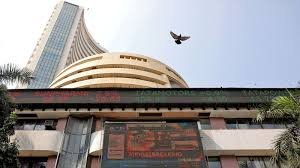

Market participants are preparing for their most unpredictable trading session of the year because Union Budget 2026 will be announced shortly. Traders should focus on disciplined risk management and well-defined options strategies according to analyst recommendations because they will need these methods to handle the Budget Day intraday price fluctuations which will happen on February 1.
Finance Minister Nirmala Sitharaman will present the Union Budget for FY26 at 11 am on Sunday. Indian equity markets will operate on this Sunday which is an exceptional occurrence because it is a weekend day. Budget announcements have historically created significant price swings in benchmark indices which affected both immediate market sentiment and the development of industry sectors during the following months.
The government will prioritize defence spending and capital expenditures according to market expectations while maintaining economic stability through international economic uncertainties. Bajaj Broking reports that policy priorities will distribute resources between permanent infrastructure development and domestic demand protection against international trade interruptions. The brokerage observed that investors have begun to concentrate their interests on companies which demonstrate strong execution abilities and maintain solid financial positions instead of following market headlines.
Trading Strategies for Budget Day
Given the expected spike in volatility, experts recommend strategies that benefit from the post-Budget “volatility crush” rather than directional bets.
Hitesh Tailor, Technical Research Analyst at Choice Broking, pointed out that India VIX has risen to 14.45 ahead of the Budget, making options relatively expensive. “In such an environment, risk-defined strategies work best,” he said.
Tailor suggested an Iron Condor strategy on the Nifty, which involved selling the 25,700 call and 25,000 put while buying protective 25,900 call and 24,800 put options. The system delivers a profit range that extends approximately 700 points, which aims to profit from the drop in implied volatility that follows the Finance Minister’s completion of the Budget speech.
He advised traders to initiate positions on Friday, January 30, to take advantage of elevated pre-event volatility. On Budget Day, traders should avoid the early “whipsaw” phase between 9:15 am and 11:00 am, with the preferred exit window typically between 2:15 pm and 3:30 pm, when volatility tends to compress.
Focus on Capital Protection
Mayank Jain, Market Analyst at Share.Market, echoed the need for caution, stressing that Budget Day trading should focus more on capital preservation than aggressive returns. He recommended defined-risk option structures such as Iron Flies, Iron Condors and credit spreads instead of naked option selling.
“These strategies are structured to benefit from the post-Budget implied volatility collapse while limiting downside risk in case of sharp price gaps,” Jain said. He also cautioned that bid-ask spreads often widen during the initial phase of the Budget speech, prompting professional traders to either wait for liquidity to stabilise or use hedged positions.
Volatility Trends to Watch
Anand James, Chief Market Strategist at Geojit Investments Ltd, highlighted that volatility typically declines after the Budget as uncertainty fades. “Over the past 15 years, VIX has generally fallen on Budget Day, except in 2020,” he noted.
Although volatility has risen sharply in the weeks leading up to the Budget, it still remains relatively low compared to historical levels just before the announcement. James believes this could allow for range expansion, making long straddle strategies attractive for traders willing to position for post-event directional moves.
As Budget Day 2026 approaches, experts broadly agree that understanding volatility behaviour, timing trades carefully and sticking to risk-defined strategies will be key to navigating one of the most eventful sessions on Dalal Street.