
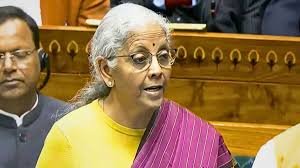
The central government has enacted a historic transformation through its establishment of the Income Tax Act 2025 which replaces the Income Tax Act of 1961 that had been in use for more than thirty years. Finance Minister Nirmala Sitharaman introduced the new tax law during the 2026 Union Budget which will make tax compliance easier while providing better filing options for all taxpayers. The Act will begin its operational period on April 1 2026.
Key Highlights of the New Income Tax Act
1. Simpler Language and Structure
The old Act’s complex legal language has been replaced with simple and clear words. The number of sections has been reduced from 819 to 536, while chapters have been consolidated from 47 to 23. To simplify calculations, the Act now includes 39 tables and 40 formulas, making tax computation straightforward.
2. Unified Tax Year
The traditional distinction between the financial year and the assessment year has been removed. Now, a single tax year will be used, helping taxpayers reconcile income and taxes within the same year without confusion.
3. Simplified ITR Filing
An easier-to-fill-in ITR form than previous one is sought to be designed with prefilled details like income from salary, bank interests, and other sources of income. Taxpayers can review and submit without extensive manual input.
4. AI-Driven Processing
The Government will accredit the use of cloud analytics and Virtual Artificial Intelligence (AI) technology, speeding up processes such as tax notices and appeals in an efficient way.
5. Key Deadlines
- One-time scheme for declaration of foreign assets introduced.
- IT payment deadline extended to March 31.
- ITR 1 and ITR 2 forms available until July 31.
The Income Tax Act-2025 is designed to benefit both individuals and businesses through three main elements which include law simplification and lower compliance requirements and technology integration for accelerated processing. The upcoming changes will deliver taxpayers their inaugural transparent tax system which offers simplified tax procedures during the past six decades.




Women’s Reservation Bill Fails in Lok Sabha; Rahul Gandhi Slams Centre, Credits Opposition Unity
The Lok Sabha rejected the women’s reservation bill on Friday which led to intense political reactions because Leader of the Opposition Rahul Gandhi accused the government of trying to damage the Constitution through its efforts to