
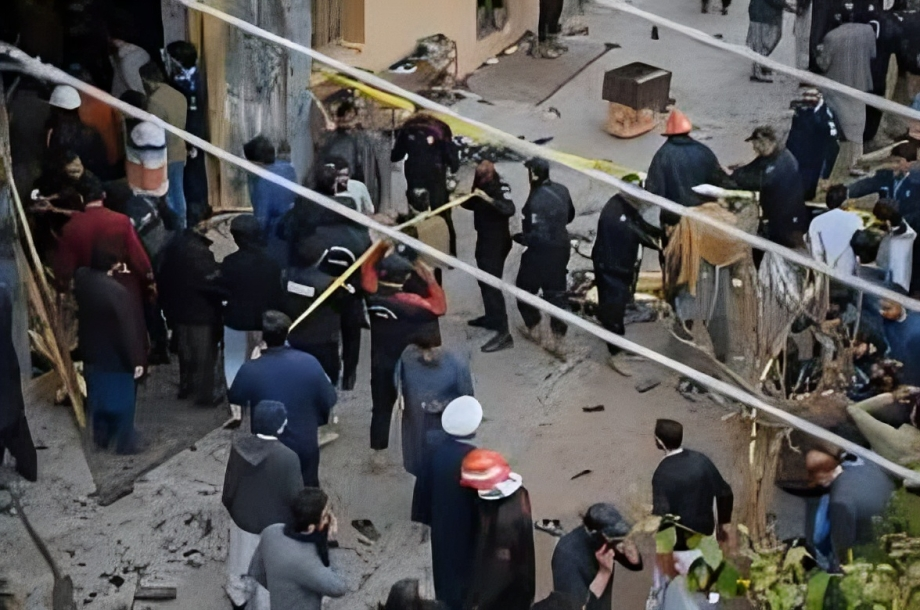
At least 31 lives were claimed and about 169 people were seriously injured in a Shia mosque in Islamabad during Friday prayers run by suicide bombers of the Islamic State group on Sunday when the explosion occurred. It was the city’s most deadly blast since the September 2008 Marriott hotel explosion.
City officials were informed that the spot was the Imam Bargah Qasr-e-Khadijatul Kubra mosque in the outskirts of Tarlia in the city. Many of the wounded were in critical condition and are at the risk of dying.
With thousands of worshipers filling the mosque to its capacity during the routine morning prayers, the blast did its catastrophic damage. A security officer had described that the assailant was intercepted at the entrance of the mosque and, therefore, had detonated the suicide vest.
According to SITE Intelligence Group, a global jihadist monitoring organization, the attack was later claimed on Sunday by the Islamic State (IS), which said one of its militants inflicted serious casualties on congregants.
Muhammad Kazim, a worshipper of the mosque, reported that the moment the prayers began, an explosion filled the atmosphere, prompting worshippers to run out of the mosque in panic. Sounding powerful, the explosion hit everybody as they were bowing down for the bowing-at-salaat.
“Just after going for the bowing Namaz, we heard a few siege fires,” he said to AFP. “And while we were still bowing, the explosion also happened.”
Imran Mahmood said there was a brief gunfight that the attacker and the volunteer guards were able to survive before the explosion.
“The attacker was attempting to walk forward; and one of the volunteers tried to chase him from behind and shot him on his thigh before the suicide bomber could cause damage,” Mahmood reported. The attacker blew himself up while falling.
A Ruined Colony
At the hospital, people, some children included, were being rushed by relatives in their own cars alongside stretchers, as seen by AFP correspondents. Some were covered in bloodstained clothes, while someone more seriously injured was carried in the trunk of the car as the only option left to transport him to hospital.
Outside the heavily guarded emergency department, the relatives stood crying in horror as more casualties were brought in front of them. Pools of blood, abandoned shoes, broken glass, and scattered building blocks were visible all over the mosque where crime-scene tapes had been unwound by the security forces.
Unverified footages, being passed around on social media, show bodies lying near the mosque’s entrance, while cartoonish debris is found all over the red-carpeted prayer hall.
Reproval and Rejoinder
Chief Minister Shehbaz Sharif put it down on record that a full-fledged inquiry was underway to personally identify whoever conceived the latest horror and apply all the might of the law.
Dar condemned the attack as “a heinous crime against humanity” and maintained that it was not Islamic. In his statement about X, Dar said, “It is a fact that the Pakistani government overties against terrorism and extremists in all different forms.”
The condolences had also been extended by the UN Secretary-General, Antonio Guterres.
Increased Security Alert
The bomb blast happened among growing violence in Pakistan (the violence, especially in the provinces of Khyber Pakhtunkhwa and Baluchistan, had been widespread). Although Pakistan is predominantly Sunni, 10 percent to 15 percent of the population also long-time victims of sectarian attacks; the people of the Shia community live in fear from that.
Islamabad has accused militant factions time and again from Afghanistan for all their attacks launched in Balachistan and Khyber Pakhtunkhwa. These accusations were immediately denied by the Afghan Taliban government within those bases under pressure. This developed an ever-deteriorating relationship as it has become really bad due to their recurring disputes and arguments on border infiltration.
Islamabad last saw a bombing of significance in November: A suicide bombing inside a courthouse complex killed 12 persons. In order to halt the insurgency attacks, there were numerous civilian and security personnel deaths as well; causing pretty big military actions by the Pakistani forces.



Women’s Reservation Bill Fails in Lok Sabha; Rahul Gandhi Slams Centre, Credits Opposition Unity