
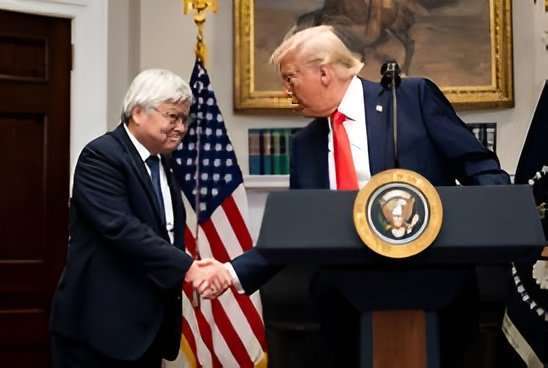
Taiwan and the United States have signed a new trade agreement aimed at enhancing economic ties, cutting tariffs, and increasing mutual investment, particularly in hightech sectors.
The arrangement will result in Washington’s lowering tariffs on several kinds of exports from Taiwan from 20% to 15%. In return, Taipei has committed to increased purchases of US goods and greater investment in the technology sector.
First unveiled in January, the agreement will lay the foundation for delivered progressions in economy-noted enthusiasm twixt the old partners, but really, the pact must first undergo a review and approval process by the parliament in Taiwan, which is currently controlled by the opposition.
“US: Barriers to Be Reduced
The agreement is seen as an attempt to reduce those barriers affecting US exports to Taiwan.
In his statement, he mentioned that the deal would strengthen supply chain resilience in particular for high-tech industries. This was based on the grounds of their long-established economic partnership.
Taiwan: The Competitive Edge Building Up
Taiwanese Vice Premier Cheng Li-chiun underscores the deal as a game changer for the status of competitive standing for the island.
He has further said that Taiwan has been accorded the “Most Favoured Nation” treatment and has secured a 12.33% average tariff rate, with prevalence set at an initial 15%, for its exports to the US without the levying of additional reciprocal tariffs.
He says the deal will shorten the disparity over Taiwan’s position, compared with those countries with existing free trade pacts with the US.
Purchase Commitments in the Multibillions
The USTR fact sheet discloses Taiwan’s pledge to import a substantial amount of these American goods by 2029- see those commitments.
$44.4bn in liquidated natural gas and crude oil
$15.2 billion in civil aircraft and its spare parts
$25.2 billion in power equipment, electricity, and related items
Meanwhile, Taiwan declares that many of its own tariff barriers will be reduced and also by expanding preferential access on US manufactured goods and agricultural crops.
The agreement is therefore seen as remarkably more significant by both the Washington and Taipei governments, positioning the deal as a stepping-stone towards economic interdependency.