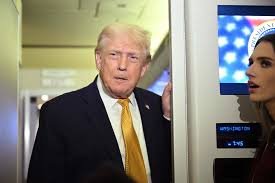
US President Donald Trump on Tuesday signalled what he described as the “end” of hostilities with Iran, claiming that the country’s Air Force, Navy and top leadership structure had been eliminated following joint US-Israeli strikes.
In a post on Truth Social, Trump asserted that Iran’s air defences and military capabilities had been wiped out and dismissed the possibility of negotiations.
“Their air defense, Air Force, Navy, and Leadership is gone. They want to talk. I said ‘Too Late!’” Trump wrote, sharing an opinion piece that described the unfolding strategy as the “birth of the Trump doctrine.”
Escalation After Joint Strikes
The remarks come just over 72 hours after coordinated US-Israel military operations targeted key sites inside Iran, triggering retaliatory missile and drone strikes and pushing the region to the brink of a wider war.
Among those reportedly killed in earlier strikes was Iran’s Supreme Leader Ayatollah Ali Khamenei, a development that has dramatically altered the country’s political landscape.
Trump had earlier indicated in an interview that the campaign could last up to four weeks, though he suggested Tuesday that Iran’s core military infrastructure had already been dismantled.
Mixed Signals on Negotiations
Trump’s comments followed statements by Ali Larijani, head of Iran’s Supreme National Security Council, who denied reports that Tehran had sought talks with Washington. Posting on social media, Larijani rejected claims that Iranian officials had approached the White House for negotiations.
However, a senior US official told the Associated Press that individuals within Iran’s leadership ranks had made contact seeking discussions. According to the official, Trump said he would consider talks “eventually,” but only after the military operation concludes.
Regime Change and Nuclear Dispute
Regime change is widely seen as a central objective of the US-Israel campaign. The White House maintains that a restructured Iranian leadership could be more open to international oversight of its nuclear programme.
US Special Envoy Steve Witkoff told Fox News that Iran had insisted on its “inalienable right” to enrich nuclear fuel and had amassed 460 kilograms of uranium enriched to 60%, which he claimed could potentially be used to produce multiple nuclear weapons.
“Iranian negotiators made it clear their goal is to maintain enrichment for purposes of armament,” Witkoff said, alleging Tehran had boasted about its nuclear stockpile.
Widening Regional Impact
Since the strikes began, Iran has launched waves of missiles and drones targeting Israeli territory, US military bases and diplomatic facilities across the Gulf. Drone attacks also forced temporary airport closures in Dubai, stranding tens of thousands of passengers.
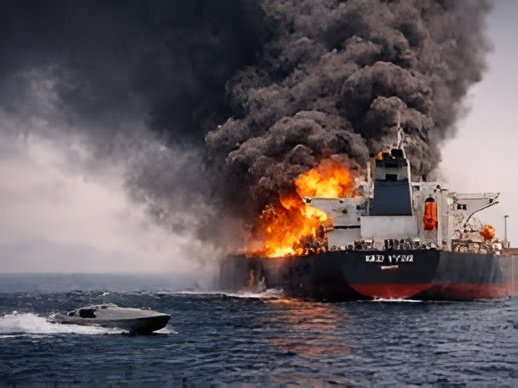
Energy markets have reacted sharply, particularly after Iran signalled a potential closure of the Strait of Hormuz — a vital maritime corridor through which roughly a fifth of the world’s oil supply passes.
India, which relies heavily on crude shipments via the Strait, is reportedly assessing contingency measures, including diversifying imports to mitigate potential supply disruptions.
With missile exchanges continuing and rhetoric escalating on both sides, uncertainty remains over whether Trump’s declaration marks a true de-escalation — or merely a pause in a rapidly evolving conflict.