
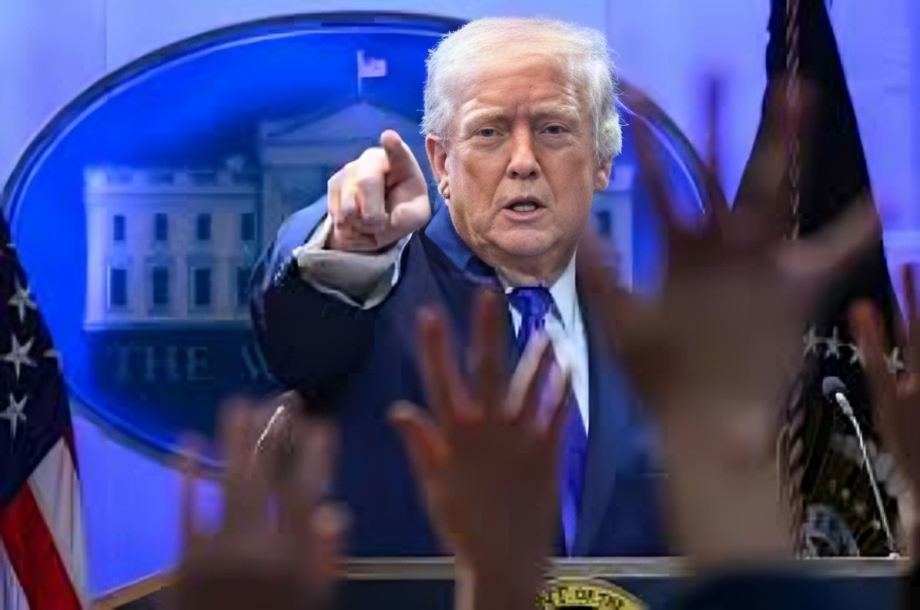
Conflicting statements from US President Donald Trump and Secretary of State Marco Rubio have sparked debate over the rationale behind Washington’s decision to join Israel’s military offensive against Iran.
While Rubio suggested the US acted to prevent retaliatory strikes following planned Israeli action, Trump said he believed Iran was preparing to attack first — prompting him to order American forces into the conflict.
Trump: “Iran Was Going to Strike First”
Speaking at the White House during a meeting with German Chancellor Friedrich Merz, Trump rejected suggestions that Israel pressured the US into war.
“I might have forced their hand,” Trump told reporters, referring to Israel. “We were negotiating, but in my opinion, they were going to attack first. If we didn’t act, they would have.”
The President did not present public evidence to support his claim that Iran was preparing an imminent strike.
Rubio: US Acted to Prevent Retaliation
A day earlier, Rubio had described the decision differently. He said Washington anticipated that Israeli military action would trigger retaliation from Iran against US forces in the region.
“We knew there was going to be an Israeli action,” Rubio told reporters. “We knew that would precipitate an attack against American forces. If we didn’t preemptively act, we would suffer higher casualties.”
When pressed again on Tuesday, Rubio clarified: “The bottom line is the President determined we were not going to get hit first. It’s that simple.”
Iran Calls Strikes ‘Unprovoked’
Iran has condemned the US assault as unprovoked and denied accusations that it was seeking to build a nuclear weapon.
According to senior US officials, American envoys had been engaged in negotiations with Iranian representatives in Geneva last week. The talks were reportedly mediated by Oman and included US envoys Steve Witkoff and Jared Kushner.
Officials said Washington pushed Iran to abandon uranium enrichment. However, Iranian negotiators instead proposed continuing enrichment at higher levels for research purposes — a move US officials viewed as a delay tactic.
One official said Iran was “unwilling to give up the building blocks” necessary to potentially develop a nuclear weapon. Tehran has consistently denied pursuing nuclear arms.
Conservative Backlash at Home
The differing explanations have drawn criticism from some conservative commentators, who argue Rubio’s remarks suggest Israel influenced Washington’s decision-making.
Prominent right-wing podcaster Matt Walsh criticized the administration’s messaging on social media, while broadcaster Megyn Kelly questioned whether the conflict primarily serves US interests.
The backlash comes as Republicans prepare for November’s midterm elections, where control of Congress is at stake.
White House in Damage-Control Mode
The debate over the lead-up to the conflict has prompted what observers describe as damage control by the administration.
Trump took questions from reporters publicly for the first time since the joint US-Israeli strikes began three days ago. Previously, he addressed the matter through recorded videos and select interviews.
According to officials, negotiators informed Trump that reaching a nuclear deal similar to the 2015 agreement brokered under former President Barack Obama could take months.
Trump ordered military action the following day. Airstrikes began on Saturday, marking a major escalation in tensions between Washington and Tehran.