
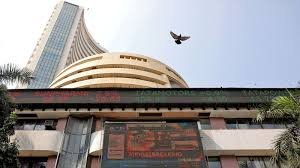
The Indian equity markets were seen plummeting on Friday, with the leading indices having succumbed to aggressive sell-off on the back of heightened global uncertainties emanating from the rising crude prices. The Nifty 50 sank by 2%, as did the Bombay Stock Exchange’s Sensex to wipe out substantial amounts of investor guild and set up the markets for their fifth consecutive week of loss, their longest stretch since the month of August.
While NSE Nifty 50 lost 2.1%, the Sensex skidded down by 2.3%. Market capitalisation was seen to dwindle by Rs 3.65 lakh crore in less than one day.
What triggered the fall in the markets?
Weak global cues
Global markets were already under pressure due to rising geopolitical tie-ups in Iran, which, however, appear all but tamed. As such, global markets are wavering between hope and realism.
The following Asian markets were no different:
South Korea’s Kospi plunged 3.6%
Japan’s Nikkei 225 slipped 1.6%
Hong Kong’s Hang Seng declined 0.2%
China’s CSI 300 dropped 0.4%
The US too experienced a violent downturn on Wall Street. For the year, the S&P 500 recorded its greatest loss with a sharp blow of a 1.7-percent fall, with the Nasdaq Composite losing 2.4 percent and officially entering correction. The Dow Jones Industrial Average dipped approximately 1%.
Continued FII Outflows
Foreign institutional investors have been selling Indian markets further, offloading Rs 1,805 crore worth of equities in the last trade. The same occurs as overseas investors dumped India for 19 consecutive days.
The total FII outflows in 2026, until this moment, have touched to date Rs. 1.55 trillion. Doubts and policy lack from collapsing markets due to global uncertainty and currency fluctuations.
The Indico Rupee-Government bond issued this week saw heavy selling pressure, plunging to a record low to breach the 94 mark against the usd. Two global economic concerns such as increasing crude oil prices is responsible for steady capital outflows and a weak currency.
Market experts infer that the Rupee has been bearish, while the US dollar continued on the uptrend with heaps of strength.
Outlook
Global brokerage firm GS has advised investors to tread cautiously on Indian equities-today their 12-month target on Nifty is 25,900, down from 29,300 set in the past-what with unfavorable macro-environmental factors such as the soaring prices of crude and moderating earnings.
Yet, the favorable industry still suggests around 13% upside for the long-term investors, despite the market weight downgrade.
Conclusion:
The markets have taken a sharp dive in India, mirroring the global geopolitics, sustained foreign outflows, and rupee’s weakness. Investors are expected to stick through the wild ride with volatility hovering, so resultantly the markets are lined with caution over the near term.





Women’s Reservation Bill Fails in Lok Sabha; Rahul Gandhi Slams Centre, Credits Opposition Unity