
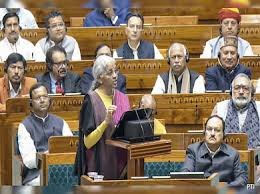
The Budget 2026 direct tax system reform which Finance Minister Nirmala Sitharaman presented to Parliament introduces multiple compliance improvements that will decrease initial tax costs while giving taxpayers additional time to fix their mistakes. The reforms create a path toward implementing the new Income Tax Act which will begin operations on April 1 2026 while also providing taxpayer-friendly initiatives before the upcoming implementation.
The core of the announcements delivers a modernized tax system which includes new filing schedules and decreased Tax Collected at Source rates and precise tax rules for compensation income and a special disclosure period for foreign assets.
Lower TCS, Big Relief for Travellers and Families
One of the most significant consumer-friendly moves is the sharp cut in TCS on overseas tour packages. The new tax system establishes a fixed rate of 2 percent which does not require any minimum taxable amount to replace the previous tax brackets of 5 percent and 20 percent.
Under the Liberalised Remittance Scheme (LRS) TCS charges for education and medical remittances will decrease from 5 percent to 2 percent which will help students and their families manage their financial obligations more easily.
New Filing Timelines, More Time to Revise Returns
As part of the transition to the new tax law, filing deadlines have been staggered:
- ITR-1 and ITR-2 filers: July 31 deadline remains unchanged
- Non-audit business cases and trusts: Deadline extended to August 31
Taxpayers will also get more time to correct mistakes. The deadline to file revised returns will now extend to March 31 each year, subject to a nominal fee. Updated returns will be permitted even after assessment proceedings begin, with an additional 10 percent tax.
Tax-Free Relief for Accident Victims
In a long-awaited clarification, interest awarded by the Motor Accident Claims Tribunal (MACT) to individuals will now be completely tax-exempt, with no TDS applicable. The move ends years of uncertainty around the taxability of such compensation.
Simpler TDS for Small Investors
To prevent unnecessary tax deductions, depositories CDSL and NSDL will now accept Form 15G and 15H from eligible investors and share them directly with companies. This will help low-income individuals avoid excess TDS on dividends and interest income.
One-Time Foreign Asset Disclosure Window
Budget 2026 introduces a six-month disclosure scheme for students, NRIs and small taxpayers to regularise foreign assets:
- Category A: Undisclosed assets up to ₹1 crore, taxed at a total of 60 percent
- Category B: Previously disclosed income but unreported assets up to ₹5 crore, with a flat fee of ₹1 lakh
Both categories offer immunity from prosecution and penalties, encouraging voluntary compliance.
Faster Dispute Resolution, Lower Cash Strain
To speed up tax litigation, assessment and penalty proceedings will be integrated. The pre-deposit required for a stay of demand during appeals has been reduced from 20 percent to 10 percent which results in lower financial burden for taxpayers. Certain minor offences have also been decriminalised and replaced with monetary penalties.
The Indian direct tax system will undergo a complete transformation through Budget 2026 which introduces three fundamental changes that will simplify tax processes and decrease taxpayer compliance requirements under the upcoming Income Tax Act.


Women’s Reservation Bill Fails in Lok Sabha; Rahul Gandhi Slams Centre, Credits Opposition Unity
The Lok Sabha rejected the women’s reservation bill on Friday which led to intense political reactions because Leader of the Opposition Rahul Gandhi accused the government of trying to damage the Constitution through its efforts to