
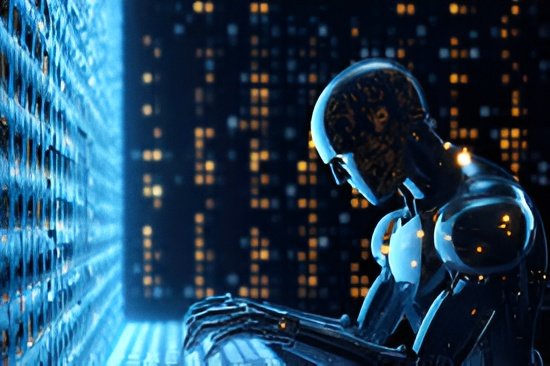
Artificial intelligence is entering a defining new phase — one where its impact moves far beyond experimentation and begins reshaping real-world systems, industries and daily work. As AI evolves from a mere tool to a true collaborator, 2026 is expected to mark a turning point in how people and technology work together.
From healthcare and scientific research to software development and quantum computing, AI is stepping into roles that amplify human capability, automate complexity and accelerate breakthroughs. Companies are also strengthening AI security and building smarter infrastructure to support this surge.
Here are the seven biggest AI trends to watch in 2026:
1. AI Will Amplify Human Potential
Microsoft’s Chief Product Officer for AI Experiences, Aparna Chennapragada, says the next wave of AI is about partnership, not replacement. AI agents will act as digital coworkers, helping small teams operate like large organizations by handling data analysis, content creation and personalization at scale.
She predicts that professionals who learn to collaborate with AI — rather than compete with it — will unlock the most value in this new era.
2. AI Agents Will Come With Built-In Safeguards
As AI agents integrate into everyday workflows, trust and security will become essential. Microsoft Security’s Vasu Jakkal says every AI agent will need clear identity controls, strict access boundaries and protection against manipulation or attack.
Security will become autonomous and embedded, enabling defenders to detect AI-driven threats faster as organizations adopt more agent-based systems.
3. AI Will Help Reduce Global Healthcare Gaps
AI’s role in healthcare is expanding rapidly. According to Dr. Dominic King of Microsoft AI, 2026 will see AI move from diagnostics into triaging symptoms, guiding treatment plans and giving millions access to better health information.
With WHO projecting an 11-million global health worker shortage by 2030, AI tools like Microsoft’s Diagnostic Orchestrator — which solved complex cases with 85.5% accuracy — could help close critical gaps in care.
4. AI Will Become a Core Member of the Research Process
Microsoft Research President Peter Lee says AI will soon act as a true laboratory assistant — generating hypotheses, designing experiments and collaborating directly with research teams.
By 2026, scientists across physics, chemistry and biology may routinely rely on AI systems that not only analyze literature but also help run experiments, drastically accelerating discovery.
5. AI Infrastructure Will Become Smarter, Not Just Bigger
Microsoft Azure CTO Mark Russinovich says the future of AI infrastructure lies in efficiency. Next-generation systems will distribute computing power more intelligently across global networks, maximizing usage and reducing waste.
These “AI superfatory” systems will route workloads dynamically — similar to air traffic control — ensuring every processor cycle is fully utilized.
6. AI Will Understand Code — and Its Context
The software industry is entering a new era of “repository intelligence,” says GitHub CPO Mario Rodriguez. With coding activity at record highs, AI will evolve to grasp not just code snippets but the history, relationships and rationale behind them.
This deeper understanding will allow AI to make better suggestions, detect issues earlier and automate routine fixes, dramatically improving software quality and development speed.
7. Quantum + AI Will Bring the Next Computing Breakthrough
Quantum computing is moving out of theory and into practice. Jason Zander, EVP of Microsoft Discovery and Quantum, says the world is entering a “years, not decades” countdown toward quantum advantage — the moment quantum machines outperform classical computers.
This shift will be powered by hybrid computing, where AI, supercomputers and quantum systems work in tandem. Microsoft’s Majorana 1, the first quantum chip built with topological qubits capable of self-correction, marks a major milestone toward scalable quantum machines.


Women’s Reservation Bill Fails in Lok Sabha; Rahul Gandhi Slams Centre, Credits Opposition Unity