
On Friday, a court in South Korea handed down a five-year prison sentence to former president Yoon Suk Yeol, thereby not only concluding but also delivering the very first judgement in a series of criminal cases which are tied to his unsuccessful attempt to declare martial law in December 2024.
The court in Seoul Central District found the ex-prosecutor aged 65 guilty on several counts including sabotaging a warrant for an arrest of a person, making faux official documents and winding through the legal requirements for declaring martial law. It was ruled by the court that Yoon had used the security service of the president to stop the investigators who wanted to interrogate him regarding the controversial decrees.
Reading out the verdict during televised proceedings, the presiding judge said Yoon had abused the vast powers of his office for personal protection. “The defendant used his authority as president to prevent the execution of legitimate warrants, effectively turning state officials into a private shield,” the judge said.
This is the first judgment related to the criminal cases stemming from Yoon’s brief but dramatic martial law declaration, which lasted only about six hours but triggered political turmoil and mass outrage across the country.
No reaction in court, appeal announced
Yoon, who is currently incarcerated at the Seoul Detention Center, did not speak a word during the proclamation of the punishment. People watching the trial pointed out that he was much thinner than when the investigations started last year. The court was full of friends and relatives on the support side, but Yoon did not show any signs of emotion concerning the decision.
In front of the court, his attorney Yoo Jung-hwa said that the convicted president would claim the verdict as an appeal, terming the ruling “politicized.” The state attorneys did not imply whether they would follow up with an appeal of their own or not.
Yoon is also involved in more legal battles, one of which is a capital case aimed at him for being the mastermind of an insurrection by trying to impose military rule and shutting down parliament without any reason to do so.
Background to the case
Yoon has insisted that imposing martial law was a constitutional right of his and asserted that the decision was intended to show what he called the obstruction of governance by opposition parties. Nevertheless, the legislators immediately revoked the order and the parliament subsequently impeached him with the backing of some of his own conservative party members.
In April of the previous year, the Constitutional Court of South Korea officially ousted Yoon from his position, declaring that he had breached the presidential duties.
The obstruction charges stem from January last year, when Yoon barricaded himself inside his residential compound and ordered the presidential security service to block investigators. He was eventually arrested in a second operation involving more than 3,000 police officers — the first arrest of a sitting president in South Korean history.
Tight security, divided public reaction
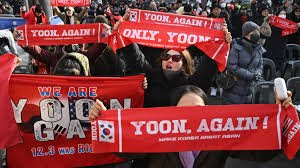
Prior to the announcement of the decision, a number of supporters were present in the court compound, and they were displaying placards asserting that Yoon was the victim of a political witch hunt and declaring him the legitimate president. The authorities had placed a strong police presence in and around the court, which is situated close to Yoon’s expensive Seoul residence.
Yoon did not receive the full possible 10-year imprisonment on the obstruction charges, but the decision still shows the seriousness of his actions that had such a strong impact on South Korea—Asia’s fourth-largest economy, a main US ally, and a country that has long been viewed as one of the region’s most democratic.
Yoon is now added to the list of former South Korean presidents that have been found guilty and imprisoned, which is a sign of the country’s unstable political environment and the judiciary’s readiness to impose sanctions even on those in the highest positions.




Women’s Reservation Bill Fails in Lok Sabha; Rahul Gandhi Slams Centre, Credits Opposition Unity