
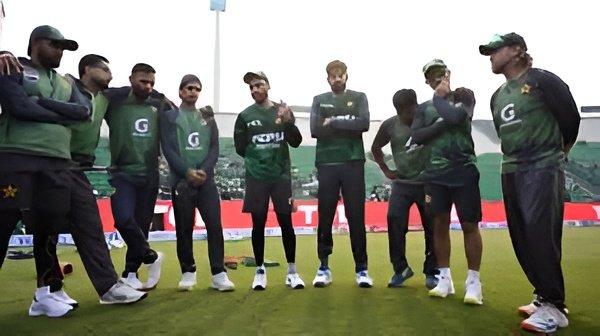
The cricketing world is bracing for a potential legal showdown as the Pakistan Cricket Board (PCB) faces accusations of violating international participation agreements. The controversy stems from the Pakistan government’s unprecedented decision to boycott the high-stakes T20 World Cup fixture against India, scheduled for February 15 in Colombo.
While the Pakistan national team has been cleared to travel to Sri Lanka for the tournament, the “selective participation” regarding the India match has placed the PCB in the crosshairs of the International Cricket Council (ICC).
A Breach of Contract?
Sources tracking the development indicate that the next 48 hours are critical. Legal experts suggest the PCB is on thin ice regarding its contractual obligations.
“PCB is violating a contract that itself is a co-signee of,” a source revealed. “The agreement explicitly states that India and Pakistan agree to play against each other at neutral venues during ICC events. Crucially, there is no force majeure clause in that agreement to justify this withdrawal.”
Under the ICC Terms of Participation, Full Member nations are required to make every effort to mitigate government concerns. The ICC is expected to demand evidence from the PCB showing what steps were taken to persuade the government to allow the match to proceed.
The “Selective” Policy Question
The ICC is also reportedly questioning the logic behind the ban. Since the Pakistan government has only barred the cricket team from playing India—and not from the tournament entirely—representatives may ask if this is a broader policy shift across all sports or a targeted disruption.
Furthermore, the PCB could face severe sanctions due to government interference in a sporting body. As the PCB is affiliated with the International Olympic Committee (IOC), political mandates overriding sporting schedules is a violation that has rarely, if ever, been seen in the history of international cricket.
The Official Stance
The crisis was triggered on Sunday when the Government of Pakistan issued a bifurcated statement:
- The Approval: The team is granted permission to compete in the ICC World T20 2026.
- The Boycott: The team “shall not take the field” for the February 15 match against India.
The ICC has responded with a firm stance on “sporting integrity,” noting that selective participation is “difficult to reconcile” with the fundamental premise of a global event where all teams must compete on equal terms.

Women’s Reservation Bill Fails in Lok Sabha; Rahul Gandhi Slams Centre, Credits Opposition Unity