
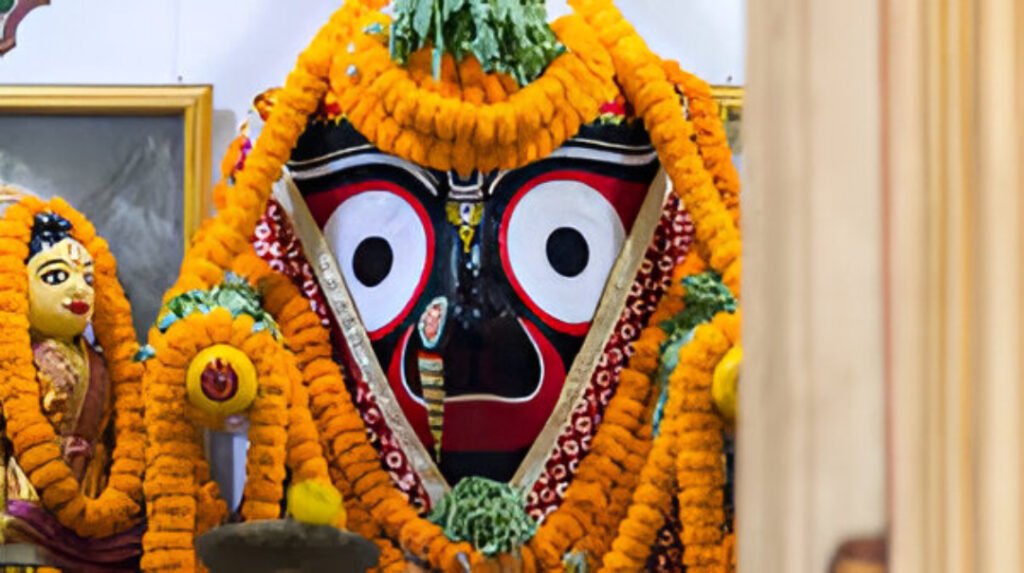
The temple of Jagannath is situated in Puri and is regarded as one of the main Vaishnava temples in India. Besides that, it is one of the few Hindu temples still receiving full attendance and is also a temple considered to be the oldest ones. This temple was a grand one, both spiritually and materially, from its inception, as King Anantavarman Chodaganga Deva, a ruler of the Eastern Ganga dynasty, commissioned it in the 10th century. Furthermore, the Lord Jagannath, Balabhadra, and Subhadra whose three forms are represented by statues, are believed to be more ancient than the temple itself. Their legends are connected to the rebirth of the mythical King Indrayumna during the Satya Yuga when he was a cousin of Lord Rama, who is also the much revered god.
King Anang Bhim Deo, the 3rd monarch of the Ganga dynasty, took over the kingdom in 1174 AD. As per legend, after unintentionally committing a sin that involved killing a Brahmin, the king performed penance by doing large public and religious construction works. He not only built new walls and shrines for the Jagannath Temple but also repaired and strengthened the existing ones. The project was said to have lasted for 14 years and consumed a fortune. Additionally, he established the Chattisanijoga, the system of temple servitors which still is in charge of the temple rituals today. Until the late 16th century, the temple worship continued without interruptions.
A major disruption occurred in 1568 when Kalapahad, a general of the Bengal Sultanate, attacked Puri after the Gajapati king Mukunda Deva was vanquished. The temple went through plundering yet the images had been moved secretly and concealed in a place close to Chilika Lake. Eventually, Kalapahad found them and attempted to destroy them. Still, the worshippers succeeded in protecting the holy Brahma (the divine essence of the deities) and got it to Kujang under cover. The temple was closed throughout this time, and the highly esteemed Mahaprasad was not dispensed.
The Renaissance got a boost with the rule of Ramachandra Deva I, king of Khurda, who not only brought back the idol of the deity but also executed the holy Nabakalebara ritual, which was an embodiment of the resurrection of the gods. In 1575, Lord Jagannath returned to Puri, ending nearly a decade of absence. In recognition of his devotion, Ramachandra Deva I was honored as ‘Abhinav Indrayumna’. His authority over the temple was later acknowledged by the Mughal Empire, with Raja Man Singh conferring upon him the title of Gajapati and Superintendent of the Jagannath Temple.
Over the centuries, control of the temple passed briefly through Maratha and British hands. The Khurda sovereigns were quite faithful to their traditional ceremonies, and that was actually the main factor that made the faithful continue to trust them. The British East India Company, in 1809, formally handed over the temple management to the local monarchs, and thus started a rule that lasted till the day of Indian Independence.
In 1975, the Archaeological Survey of India undertook a huge restoration work, which included the removal of lime-plaster layers to reveal the original khondalite stone architecture underneath. After two decades of restoration, the temple shed its colonial-era identity as the “White Pagoda” and regained its original earthy grandeur.
What really makes the Jagannath Temple different from other temples is the living ritual practice that is an unbroken tradition. The god’s images are not worshiped as far-off gods but as very close family members. Their everyday life is like human life-they wake up listening to music, taking a bath, dressing, eating several times, and so on, finally falling asleep to the comforting verses of Jayadeva’s Gita Govinda. The greatness of devotion was reflected in the peak of the day’s offering that sometimes was just the noon meal comprising hundreds of dishes.
Jagannath Temple has gone through a lot of turmoil and change, but still, it has been a powerful universal symbol of resilience, devotion, and continuity—where faith is not just maintained but experienced every day.

Women’s Reservation Bill Fails in Lok Sabha; Rahul Gandhi Slams Centre, Credits Opposition Unity
The Lok Sabha rejected the women’s reservation bill on Friday which led to intense political reactions because Leader of the Opposition Rahul Gandhi accused the government of trying to damage the Constitution through its efforts to