
New Study Shows Specialized Heart Nerve Cells that steer how the heart works and help ward off sudden cardiac arrest
Researchers just uncovered fresh clues about the heart own network of nerve cells, which people often call the heart little brain. It turns out this internal wiring is deeply involved in keeping the heartbeat steady, and it also seems to defend the organ when the body faces intense physical pressure or emotional upheaval.
The results were published in the journal Cell, and they may lead toward treatments for problems like heart rhythm disorders, heart failure, and sudden cardiac death.
What Is the Heart’s ‘Little Brain’?
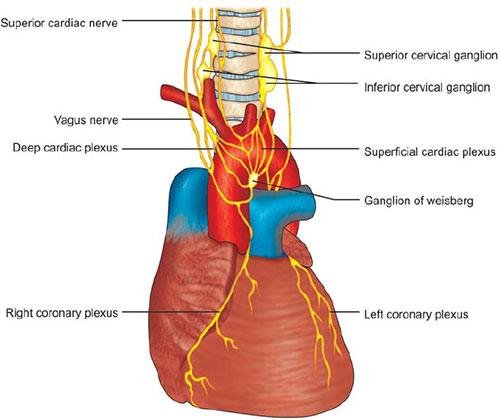
Scientists have long known that the heart contains its own network of nerve cells, known as the intrinsic cardiac nervous system (ICNS). This internal nerve network works alongside signals sent from the brain to regulate heart rate and maintain normal heart function.
However, because the ICNS contains relatively few nerve cells, its exact role has remained largely unclear—until now.
Researchers Identify Two Types of Heart Nerves
To better understand how the ICNS functions, researchers at Yale University School of Medicine genetically modified adult mice so that their heart nerve cells glowed under imaging techniques, allowing scientists to map them in unprecedented detail.
After analyzing gene activity, the team identified two distinct groups of nerve cells:
- Npy neurons
- Ddah1 neurons
Using advanced 3D imaging, researchers traced where these nerve cells were located and discovered that each group connected to different regions of the heart, suggesting they perform unique functions.
Npy Neurons Keep the Heart Beating
Experiments showed that firing Npy neurons made the heart rate go slower a bit, like not instantly but clearly.
More importantly, when researchers removed, or otherwise eliminated these nerve cells, the heart worked worse quickly, and it progressed until the animals eventually died.
So the results point to the idea that these neurons are required for keeping normal cardiac activity and for survival.
As the researchers describe it, the heart’s internal nervous system is not just some supportive mesh, it is fundamental for keeping the heart working right.
Ddah1 Neurons Protect the Heart During Stress
Unlike Npy neurons, Ddah1 neurons appeared to have little effect under normal conditions. Removing or stimulating these cells did not noticeably change heart function in healthy mice.
However, their importance became evident when the animals were subjected to intense physical restraint, a model commonly used to simulate severe stress.
During these stressful conditions, Ddah1 neurons became highly active, helping stabilize the heart’s electrical activity.
When these protective nerve cells were absent, the mice developed dangerous heart rhythm disturbances that led to sudden cardiac arrest.
The researchers concluded that Ddah1 neurons play a critical role in protecting the heart from life-threatening electrical instability during extreme physical or psychological stress.
Potential Impact on Heart Disease Treatment
The discovery provides new insight into how different populations of heart nerve cells perform specialized functions, opening the door to more targeted treatments for cardiovascular diseases.
Scientists believe abnormalities within the intrinsic cardiac nervous system are linked to conditions such as:
- Atrial fibrillation
- Heart failure
- Sudden cardiac death
- Cardiac rhythm disorders
A better understanding of how these nerve cells work may eventually help researchers develop therapies that target the heart’s own nervous system rather than relying solely on medications that affect the entire body.
Study Offers New Direction for Cardiac Research
The findings show that the heart is more than a muscular pump, it has this intricate inner nervous network too, that can manage the heartbeat on its own and help protect the organ during times of extreme stress, or so the results suggest.
Researchers claim that further work is still needed to figure out if human hearts contain similar nerve cell populations, and also whether they can be targeted to prevent serious cardiovascular diseases.
The study was published in the journal Cell and it adds to the growing body of evidence that the heart’s “little brain” matters much more for cardiac well-being than people thought before.